Vegetable Industry: Stable Harvest, Overflowing Storage Facilities
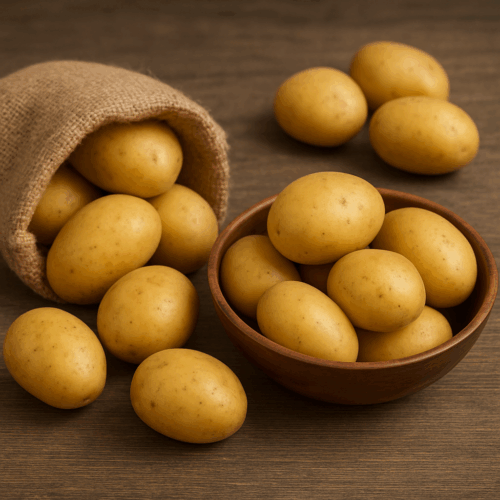
The Russian Ministry of Agriculture estimates the agricultural sector’s total vegetable production in 2025 at 7.6 million metric tons, excluding potatoes. According to the Russian statistics agency Rosstat, the harvest in 2024 was roughly the same. The production of open-field vegetables amounted to 5.3 million metric tons in 2025, a 3% increase from the previous year. In the record year of 2021, the figure stood at 5.7 million metric tons. On average, the open-field vegetable harvest over the past five years was 5.33 million metric tons. By 2030, the harvest is expected to increase to 6.2 million metric tons.
Tomatoes accounted for the largest share of vegetable production in 2025 at 1.06 million metric tons (20%), followed by white cabbage (795,000 metric tons, 15%), onions (636,000 metric tons, 12%), carrots (530,000 metric tons, 10%), cucumbers (424,000 metric tons, 8%), and beets (318,000 metric tons, 6%). Bell peppers, zucchini, and eggplants together totaled 1.5 million metric tons (29%). Across Russia, the largest shares of vegetable production came from the Krasnodar Region (16%), the Astrakhan Region (13.6%), Volgograd (9%), Rostov (about 8%), and the Republic of Dagestan (7.2%). The figures come from the Russian Ministry of Agriculture, the statistics agency Rosstat, and Russian agricultural companies.
Russia’s self-sufficiency rate for vegetables stood at 89.6% in 2025, just below the government’s target of 90%. The Ministry of Agriculture reported the highest rate for potatoes, at around 98%. The ministry did not provide any data on self-sufficiency in tomatoes and cucumbers last year. Andrei Kasakov, executive director of the Russian Fruit and Vegetable Association, estimates Russia’s self-sufficiency rate at 66% for tomatoes and approximately 95% for cucumbers.
Vegetable Storage Facilities Overflowing
The Russian agricultural sector is facing a shortage of vegetable storage facilities. According to the Ministry of Agriculture, their total capacity is 9.38 million metric tons. Of this, only 3.5 million metric tons are intended for field-grown vegetables. Experts estimate that the demand for storage capacity, taking into account exports and imports, amounts to 4.5–5 million metric tons. The government has been subsidizing the construction of vegetable storage facilities since 2025. Farmers can receive a 25% reimbursement of construction costs. Last year, storage capacity was expanded by 210,000 metric tons, 120,000 metric tons of which were in southern Russia. This year, storage capacity is set to increase by 250,000 metric tons.
Potatoes in Abundance
According to preliminary estimates, the potato harvest in the agricultural sector in 2026 will decline by 11.5% to 7.5 million metric tons compared to the previous year (8.4 million metric tons), forecasts the industry analysis firm AB-Zentr. The total area planted with potatoes amounts to 968,000 hectares, a decrease of about 2% from the previous year. AB-Zentr Managing Director Alexei Plugov attributes this to last year’s drop in potato prices, which made the crop less profitable and led farmers to reduce their planted acreage. However, most potatoes in Russia are grown by private households. Last year, their harvest totaled 11 million metric tons, compared to 10.5 million metric tons in 2024.
At the same time, the 2025 potato harvest was particularly bountiful. The yield per hectare in commercial potato cultivation in 2025 amounted to 310.9 decitonnes per hectare (10,000 m²). One deciton is equal to 100 kg. According to Plugov, this was the highest yield in the modern history of Russian potato farming. Over the past five years, the average yield per hectare for potatoes was 274 decitons per hectare.
From a Potato in Short Supply to an Export Potato
Russia increased its potato exports elevenfold to 163,000 metric tons in the first half of 2026, reports the Russian industry magazine Pole.RF. The largest buyers included Kazakhstan (127,000 metric tons), Turkmenistan (10,300 metric tons), and Mongolia (7,300 metric tons). By comparison, during the same period in 2025, Russia exported only 15,000 metric tons of potatoes to Uzbekistan (11,000 metric tons) and Belarus (4,000 metric tons), says Alexei Krasilnikov, executive director of the Russian Potato Association. This significant difference is primarily due to the poor harvest of 2024. That year, Russian farmers harvested 1.4 million metric tons fewer potatoes due to extreme weather fluctuations, representing a 16% decline compared to 2023. Consequently, Russia’s potato imports declined: from 735,700 metric tons in 2024 to 421,700 metric tons last year. Russia’s largest potato suppliers in 2025 were Egypt (268,000 metric tons), China (61,300 metric tons), and Belarus (32,000 metric tons).
Turkish Dominance
One-third of all tomatoes on the Russian market come from abroad, says Tamara Reshetnikova, managing director of the market research firm Technologii Rosta. Their import volume remains stable at between 400,000 and 500,000 metric tons per year, Reshetnikova adds. Turkey is particularly dominant in the import of tomatoes, cucumbers, and bell peppers. In the period from January to October 2025 alone, Turkey increased its tomato exports to Russia by 25% to 420,000 metric tons compared to the same period the previous year. Exports of cucumbers rose by 40% to 85,000 metric tons, and those of bell peppers by 15% to 12,000 metric tons.
These imports were facilitated by a trade agreement between Russia and Turkey that drastically reduced import duties on Turkish vegetables in 2025. The imported produce also competed with Russian farmers on price: for example, a Turkish tomato cost 85–90 rubles per kg wholesale, compared to 110–120 rubles per kg for tomatoes produced in Russia.
Sources: Agroserver, Kommersant, Interfax 1, 2, 3, Pole.RF, Forbes
Source: German-Russian Chamber of Foreign Trade, Vegetable Industry: Stable Harvest, Overflowing Warehouses, September 25, 2026.
This article was prepared for the German-Russian Chamber of Foreign Trade.