Tajikistan

Central Asia
Russia is forgiving Tajikistan $300 million in electricity debt. The Sangtuda-1 plant is generating 2.1% less electricity, and Moscow is negotiating its expansion.

Central Asia
Tajikistan's capital investments rose by 44.9% to approximately $3.2 billion over nine months, driven by the government and the energy sector centered around Rogun.

Central Asia
The IMF now expects Tajikistan to grow by 7.3% in 2026 instead of 6.0%, while the World Bank has raised its forecast to 7.5%: The October round of forecasts is more favorable for Dushanbe than for any other country in Central Asia.

Central Asia
Tajikistan's parliament has ratified a World Bank grant of $300 million for the Rogun hydroelectric power plant: The 3,780-MW project is expected to mobilize up to $3 billion in preferential financing.

Central Asia
Tajikistan's capital investments grew by 18.4% in the first half of 2026, while foreign capital plummeted by 31.4% during the same period, according to the EDB.

Central Asia
Tajikistan will raise public sector salaries by up to 25 percent effective September 1; the minimum wage will increase by 30 percent to the equivalent of about $141 per month.

Central Asia
Tajikistan's industrial output plummeted by nearly 38% in the first half of 2026, while exports rose by 65.3% to $1.6 billion, driven by gold and minerals.
Central Asia
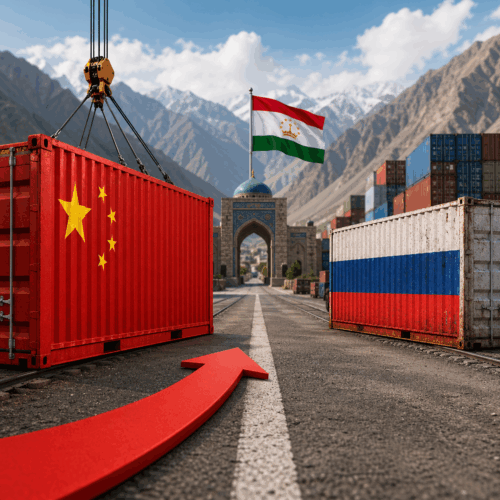
For the first time in over 20 years, China has overtaken Russia as Tajikistan’s largest trading partner. Bilateral trade is projected to reach $4.3 billion in 2025.