Russia's Auto Market: Recovery from a Low Base
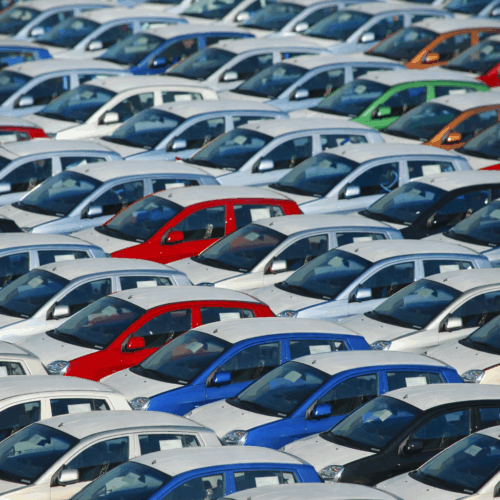
Russians purchased 608,618 new passenger cars in the first half of 2026. That is 14.8% more than in the same period last year, according to the Russian analytics agency Autostat. In June, the market grew by as much as 29% to 116,276 vehicles. The recovery follows a slump: In the first half of 2025, sales had fallen by 26% to 530,380 cars. Dealer discounts and pent-up demand are driving the growth, while high interest rates on loans continue to slow it down.
Chinese brands dominate, while Japanese brands are making a comeback through the back door
Lada remains the market leader with 152,131 cars sold. However, the manufacturer is losing ground: Sales fell by 2.2%, and its market share dropped from 27% to 24% in June. The Lada Granta remains the bestseller with 11,289 sales in June alone, while the more expensive Lada Vesta model saw sales plummet by 35% in the first six months.
Chinese-made city SUVs are in high demand. Haval, number two on the list of best-selling cars, increased sales by 31.6% to 84,113 cars. The Chinese automaker’s most affordable car, the Jolion compact SUV produced near the city of Tula, saw a 120% increase in June. The new brand Tenet, which manufactures models for the Chinese Chery Group, sold 63,996 cars right out of the gate, climbing to third place in the ranking of best-selling cars. The Tenet T7 model was Russia’s second-best-selling car, with 36,490 units sold. Belgee, the Belarusian joint venture with the Chinese Geely Group, grew by 61.6% to 28,811 cars. Jetour (15,933, +1.5%) and Jaecoo (13,258, +35.2%) also remained in the top 10. The biggest loser among Chinese brands was Changan, with a 22.6% decline to 23,178 cars.
Japanese brands that are not officially represented in Russia are showing remarkably strong growth. Toyota doubled its sales to 16,632 cars, while Mazda increased its sales 8.6-fold to 11,731—nearly back to 2021 levels. The cars enter the country via parallel imports: According to Autostat CEO Sergey Zelikov, 96% of the Mazdas sold were assembled in China. The main driver of this growth is the CX-5, whose 150-PS engine remains below the 160-PS threshold at which the increased recycling fee becomes due upon import. Since January 2026, a new car with 160–190 PS has been subject to a recycling fee of around 900,000 rubles, equivalent to 10,100 euros.
Nearly two-thirds of the cars are assembled in Russia
Vehicles produced in Russia achieved a 63.4% market share in the first half of the year, 8 percentage points more than a year earlier, according to the Russian Ministry of Industry and Trade. 431,000 cars assembled in Russia found buyers, 29.3% more than in the previous year.
The new Tenet brand illustrates how localization works: The AGR Group has been manufacturing the brand since August 2025 at the former Volkswagen plant in Kaluga—with its own welding shop, paint shop, and more than 4,000 employees, many of whom have experience at Volkswagen. Chery provides the technical platform; the T7 corresponds to the Tiggo 7L. Domestic production is also growing in the electric vehicle segment: Of the 54,300 hybrids and electric cars sold—a 90.7% increase over the previous year—27.3% were assembled in Russia, up from just 9.4% in the same period the previous year.
Annual Forecasts and Comparison with Germany
The German market remains more than twice as large as the Russian one: The Federal Motor Transport Authority (Kraftfahrt-Bundesamt) recorded 1,484,393 new passenger car registrations in the first half of the year, 5.8% more than in the previous year. Russia thus accounts for 41% of the German volume.
The structural difference lies in the powertrain. In Germany, one in four new cars in the first half of the year was a pure electric vehicle (368,006 units), while gasoline-powered cars lost 16.8% of their market share. In Russia, hybrids and electric cars together accounted for about 9% of passenger car sales, with all-electric cars making up about 1%.
For the full year in Russia, the Rolf dealer group expects approximately 1.3 million passenger cars to be sold, while the Association of European Businesses in Russia (AEB) forecasts 1.4 million. However, the second half of the year will be compared to a higher baseline from the end of 2025, so growth rates are likely to decline. The Russian Automobile Dealers Association (ROAD) considers a 5% increase for the full year to be likely.
Source: Federal Motor Transport Authority (DE) Autostat, Vedomosti, Kommersant, Izvestia, Rossiyskaya Gazeta, Avtoreview (all RU)
Source: German-Russian Chamber of Foreign Trade, Russia’s Auto Market: Recovery from a Low Base, July 17, 2026.
This article was prepared for the German-Russian Chamber of Foreign Trade.
Earlier coverage: Russia
- Lower Profits, Expensive Loans: Russian Companies Are Investing Less · October 29, 2026
- Key Interest Rate Remains at 14%: Russian Central Bank Prepares for a Prolonged Period of High Interest Rates · October 28, 2026
- Russia: key rate stays at 14%, wiiw sees 0.6% growth · October 26, 2026
- Competition with China: German Economy Under Increasing Pressure · October 26, 2026
The day's most important Russian economic stories. Free, in your inbox three times a week.
Mon, Wed, Fri. Double opt-in, unsubscribe anytime. By subscribing you consent to the processing of your email address as described in our Privacy Policy.