Hungary's inflation rises to 2% in October: Fuel prices rise by 11.3%
Inflation in Hungary stood at 2% in October, compared with the same month a year earlier. The Hungarian Central Statistical Office (KSH) reported this on November 10. In September, the rate was still at 1.6%, as shown in the report on Hungarian inflation in September. The October figure is the highest since April, when inflation reached 2.1%. Compared to the previous month, consumer prices rose by 0.4%. Core inflation rose from 1.9% to 2.1%.
Fuel is driving inflation in Hungary
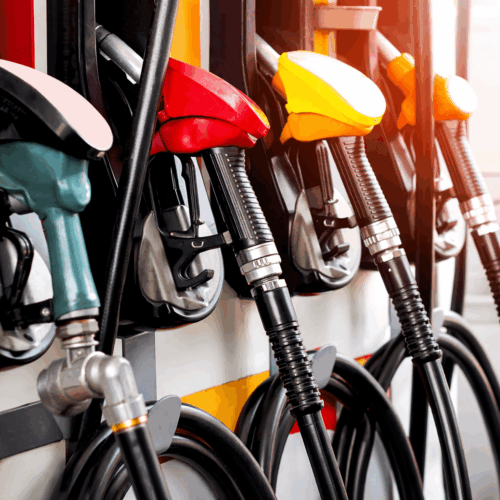
Fuel costs were 11.3% higher than a year ago and 3% higher than in September. Finance Minister András Kármán wrote on Facebook on November 10: “The change in fuel prices is the primary factor behind these figures.” The quote has been translated from Hungarian. According to Kármán, fuel contributed 0.2 percentage points to the monthly increase. The government’s forecast for the annual average remains largely unchanged.
Services became 5.2% more expensive, up from 4.9% in September. Travel abroad cost 6.3% more, while telephone and internet services rose 6.2%. Alcohol and tobacco prices increased by 3.2%, and durable consumer goods by 1.4%.
Food prices, on the other hand, were 1.1% lower than in October 2025. Butter prices fell by 14%, pork by 10.9%, cheese by 10.8%, and milk by 8.9%. Potato prices rose by 14%. Compared to the previous month, food prices rose by 0.2%. Household energy costs fell by 4.3%: piped gas cost 11.2% less, while electricity cost 1.2% more.
ING economist Péter Virovácz interprets the figures as follows: “Inflation has thus accelerated, but it has not yet broadened.” The quote is from November 10 and has been translated from Hungarian. Virovácz attributes nearly half of the monthly increase to fuel.
Central Bank to Decide on November 17
The central bank, the MNB, has kept the key interest rate at 5.5% since August. On October 20, the Monetary Council left it unchanged, as described in the report on the Hungarian key interest rate. The rate is thus 3.5 percentage points above the inflation rate. The next meeting is scheduled for November 17.
The MNB expects an annual average inflation rate of 1.8% for 2026 and 3.1% for 2027. Gábor Regős, chief economist at the asset management firm Gránit Alapkezelő, sees the rate at the lower end of the target range. He cites higher excise taxes and the expected end of margin caps in the food retail sector as risks. The caps were still in effect as of November 10. Regős considers an interest rate cut in December less likely because energy prices on the global market remain high.
Growth provides no counterargument for the central bank: Hungary’s economy grew by 1.5% year-over-year in the third quarter.
What this means for German companies
German food exporters are facing falling shelf prices and capped retail margins in Hungary. This is putting downward pressure on the chains’ purchase prices. Companies operating branches in the country are paying 5.2% more for services than they did a year ago.
Investors continue to face high financing costs in forint because the key interest rate is 3.5 percentage points above inflation. A rate cut before the end of the year is becoming less likely. Anyone selling in forint or taking out loans should hedge against interest rate and exchange rate fluctuations.
Sources: KSH, Consumer Prices October 2026, via Portfolio, Telex, and Index (HU); Finance Minister András Kármán via Index and Mfor (HU); analysts via Mfor (HU); MNB (EN)
SK, Frankfurt
Earlier coverage: Central Europe
- Czech Economy Grows 1.6% in the Third Quarter: The Slowest Growth in Two Years · November 4, 2026
- Hungary's economy grew by 1.5% in the third quarter: Inflation stands at 1.6%, and the key interest rate is 5.5% · November 3, 2026
- Poland's inflation falls to 3.5% in October: Prices drop 0.4% from the previous month · November 2, 2026
- Slovakia Projects a 4.94% Deficit for 2027: S&P Affirms A Rating; Industry Contracts by 0.2% · October 28, 2026