Pharmaceutical Market: More In-House Production, Western Specialty Formulations
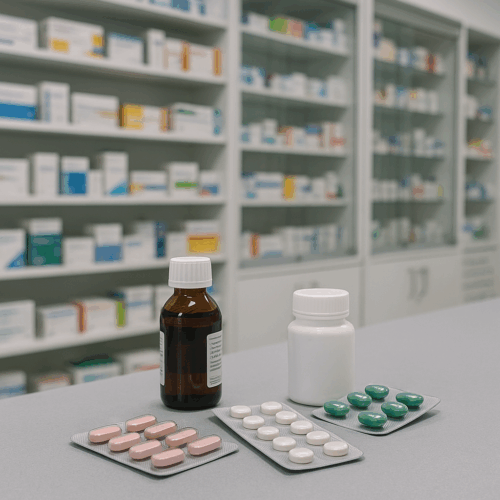
More than half of Russia's spending on medicines goes toward foreign drugs. Of the nearly 700 billion rubles (about 7.7 billion euros) spent on medications between January and August 2026, 56% went toward foreign drugs. This was calculated by the American financial news agency Bloomberg based on data from the Moscow-based market research firm DSM Group. In 2022, the share was nearly the same at 57%.
In terms of unit volume, Russian manufacturers dominate the market. However, Western manufacturers continue to dominate the market for expensive specialty drugs used to treat cancer, autoimmune diseases, and rare diseases. In Germany’s trade with Russia, pharmaceuticals have replaced machinery and automobiles as the most important export commodity.
Many Packages, Little Revenue
A study by the St. Petersburg State University of Chemical and Pharmaceutical Technology illustrates the gap between volume and revenue. According to the study, 64.6% of the packages sold in Russia last year came from domestic manufacturers. However, they accounted for only 45.9% of revenue.
In the low-cost segment—for medications priced under 100 rubles (approx. 1.10 euros)—the number of imported packages fell from 297.8 million in 2020 to 94.7 million in 2025. During the same period, the average price of an imported package rose by 130%. The authors attribute this primarily to the shift toward complex, expensive drugs. In oncology, international manufacturers account for 74.2% of sales, and for biotech drugs, 62.7%. This figure includes their production localized in Russia.
A large portion of the medications in Russia is not distributed through pharmacies but rather through government tenders. Clinics, regions, and federal programs use this method to purchase medications for hospitals and for patients who receive their medications free of charge, such as those with cancer or rare diseases. Here, too, Russia’s market share is growing only slowly. Between July 2024 and July 2026, it rose from 32% to 37% in monetary terms and from 79% to 82% in terms of packages, according to the industry portal Pharmvestnik. The ranking of the largest pharmaceutical suppliers in Russia for the first three quarters of 2026 was led by the Swiss companies Roche and Novartis, as well as the British company AstraZeneca. Only three Russian companies are among the top ten suppliers.
Generics Yes, New Developments Hardly Any
Russian companies are growing primarily in areas where patents are expiring. According to Bloomberg, pharmaceutical production from January through August 2026 was approximately 71% higher than during the same period in 2021. One example is Bayer’s anticoagulant Xarelto. Since its patent protection expired, Russian manufacturers have been copying the drug on a large scale. As a result, the Leverkusen-based company lost its long-standing leading position in the Russian pharmacy market.
Foreign companies such as Johnson & Johnson, Servier, AstraZeneca, and Roche are bringing original drugs to market. Among newly registered cancer drugs, the share of originals from January through July 2026 was 13%, up from 9% the previous year.
Strategy Through 2030 with Loopholes
The government wants to push Russian manufacturers more strongly toward developing their own new products. “We do not want to become hostages to the so-called generic drug model,” said Industry Minister Anton Alikhanov in January during a meeting with President Vladimir Putin. The framework is set by the Strategy for the Development of the Healthcare System, which the Russian president signed on December 8, 2025, via Decree No. 896. By 2030, 90% of the drugs on the list of essential medicines are to be produced in Russia, measured in units of volume. The document classifies dependence on foreign medicines as a threat to national security.
On the other hand, Russia extended until the end of 2027 the rule allowing medicines in packaging intended for foreign markets to be imported with a Russian label. And for new high-tech drugs from abroad, the government has simplified the procedures, according to Bloomberg. Medicines are largely exempt from Western sanctions for humanitarian reasons. If a foreign company manufactures a drug in Russia, it is officially classified as Russian. This applies, for example, to plants operated by AstraZeneca, Novartis, and Sanofi.
Pharmaceuticals Are Germany’s Largest Export Category
In the first half of 2026, Germany exported goods worth 3.4 billion euros to Russia, 73.1% less than in the first half of 2021, according to the Federal Statistical Office. Pharmaceutical products accounted for the largest product group at 42.4%, corresponding to approximately 1.4 billion euros. Machinery, which had been the top category before 2022, accounted for only 11.1%. Across the EU as a whole, pharmaceutical exports to Russia rose by just under a third from January to July 2026 compared to the same period in 2022, reaching 6.7 billion euros, according to Eurostat.
Sources: Bloomberg (EN); Destatis; Kommersant 1, 2; Pharmvestnik 1, 2 (all RU)
Source: German-Russian Chamber of Foreign Trade, Pharmaceutical Market: More Domestic Production, Western Specialty Drugs, November 19, 2026.
This article was prepared for the German-Russian Chamber of Foreign Trade.
Earlier coverage: Russia
- Russia: Trade with Africa Reaches $27 Billion · November 16, 2026
- Value Added in the Auto Industry: How Much of the Purchase Price Remains in the Country · November 15, 2026
- Russia: Business trips cost 63,000 rubles per person · November 15, 2026
- Russia: Tunnel through the Bering Strait for $205.4 billion · November 14, 2026
The day's most important Russian economic stories. Free, in your inbox three times a week.
Mon, Wed, Fri. Double opt-in, unsubscribe anytime. By subscribing you consent to the processing of your email address as described in our Privacy Policy.