Nord Stream Could Save 9.5 Billion Euros a Year, but No Resumption in Sight
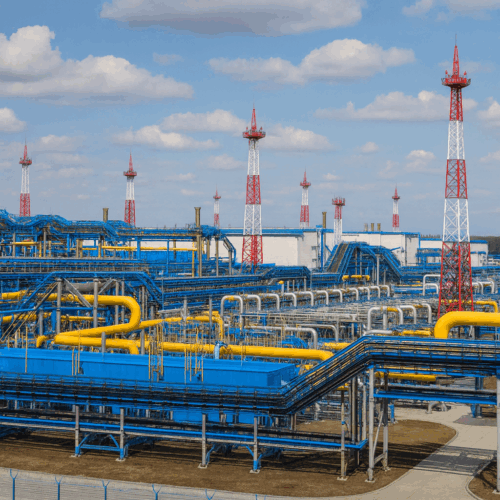
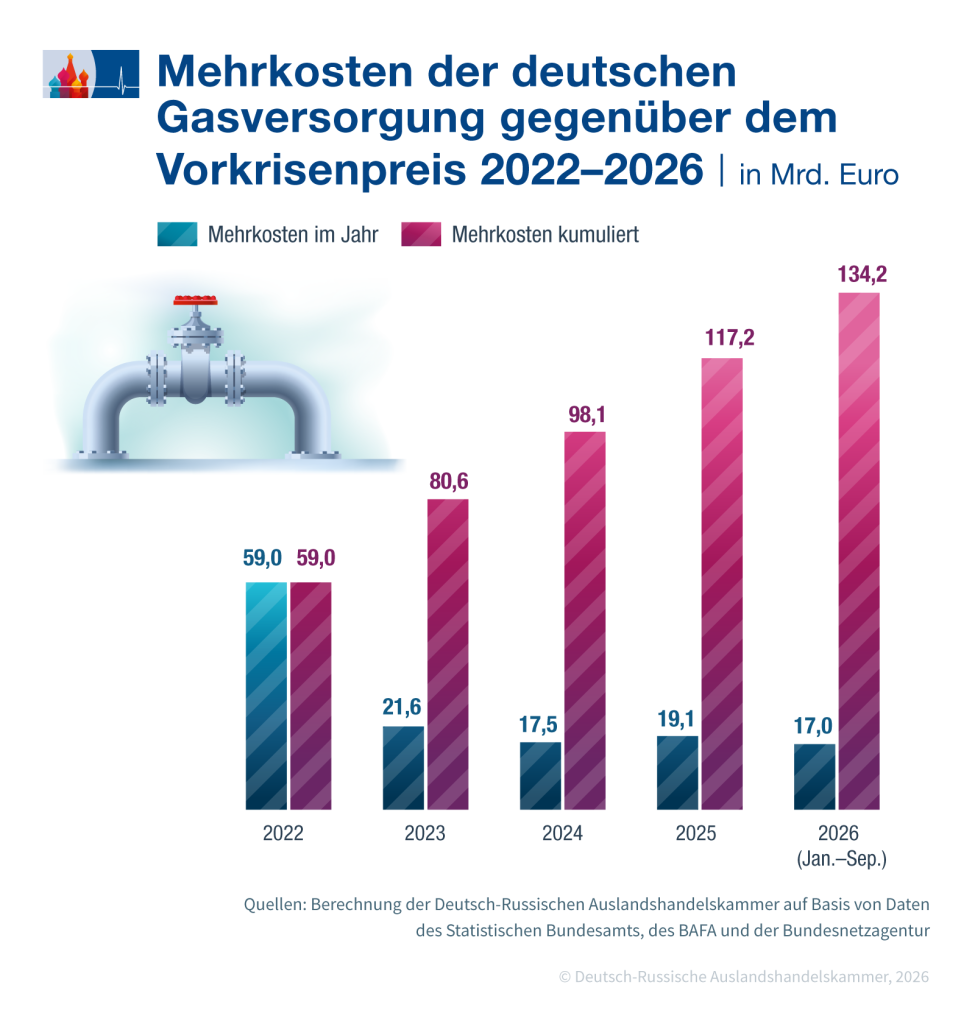
Since 2022, Germany has paid approximately 134 billion euros more for its gas than it would have at pre-crisis prices—the equivalent of about 1,600 euros per resident. This is according to a calculation by the German-Russian Chamber of Foreign Trade.
According to the model calculation, the launch of the intact Line B of Nord Stream 2 would lower the European gas price by about 16% and save Germany about 9.5 billion euros per year. If gas were to flow through all four Nord Stream lines, the current gas price could drop by nearly half. From a sanctions and political standpoint, a restart is currently considered virtually impossible. On October 28, the European Commission rejected it even for the period after hostilities have ended.
High Gas Prices Spark New Debate on Nord Stream
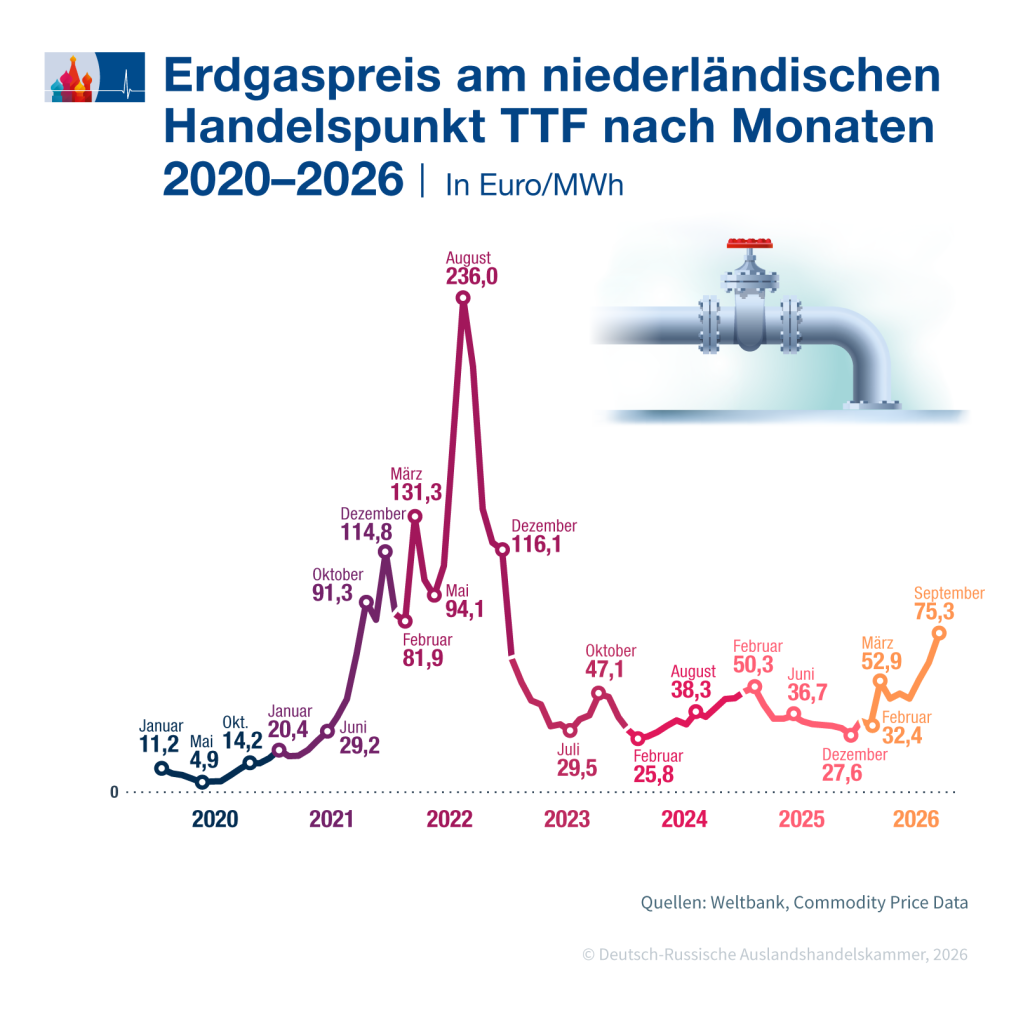
At the end of October, gas in Europe was more expensive than it had been since 2022: On October 28, a megawatt-hour (MWh) cost 102.7 euros at the German trading hub THE, according to the German Association of Energy and Water Industries (BDEW). By November 11, the price had fallen to 88 euros. In February, before the U.S. and Israeli attack on Iran, the monthly average European gas price was still 32.4 euros, according to converted data from the World Bank. Since then, attacks in the Strait of Hormuz have disrupted supplies from Qatar. On November 13, German gas storage facilities were only 57.7% full—significantly less than in previous years, when they were over 70%, according to data from the Federal Network Agency.
The debate over the involvement of American investors in the Nord Stream pipelines has also resumed. Washington and Moscow are said to have discussed the participation of a U.S. investor, the British news agency Reuters reported in early October. Moscow is openly advocating for a fresh start. “From a long-term, strategic perspective, these pipelines will most likely be needed,” said Deputy Prime Minister Alexander Novak, who is responsible for energy issues, on October 27, according to the industry portal Neftegaz.ru. On the same day, at the Gas Exporting Countries Forum (GECF) summit in Moscow, President Vladimir Putin accused the European Union (EU) of having harmed itself: “Don’t dig a pit for someone else, or you’ll fall into it yourself. That is exactly what, in my view, has happened today in the countries of the European Union,” the government newspaper Rossiyskaya Gazeta quoted him as saying.
The U.S. government intends to put the resumption of Russian gas supplies via Ukraine and the intact Nord Stream pipeline on the agenda of the ceasefire negotiations, reported the New York business newspaper *The Wall Street Journal*. Russia is to receive the proceeds in a trust account so that it does not use the money for military spending. According to the newspaper, this would be “a very lucrative opportunity” for U.S. investors. Energy consultant Johannes Benigni, head of the Vienna-based consulting firm JBC Energy, sees this primarily as a move driven by American interests: “The Americans want to step in as middlemen and also control the flow of Russian gas to Europe. That is their goal, and now they see an opportunity to do so,” he told the daily newspaper *Welt*.
What Nord Stream Meant for Germany
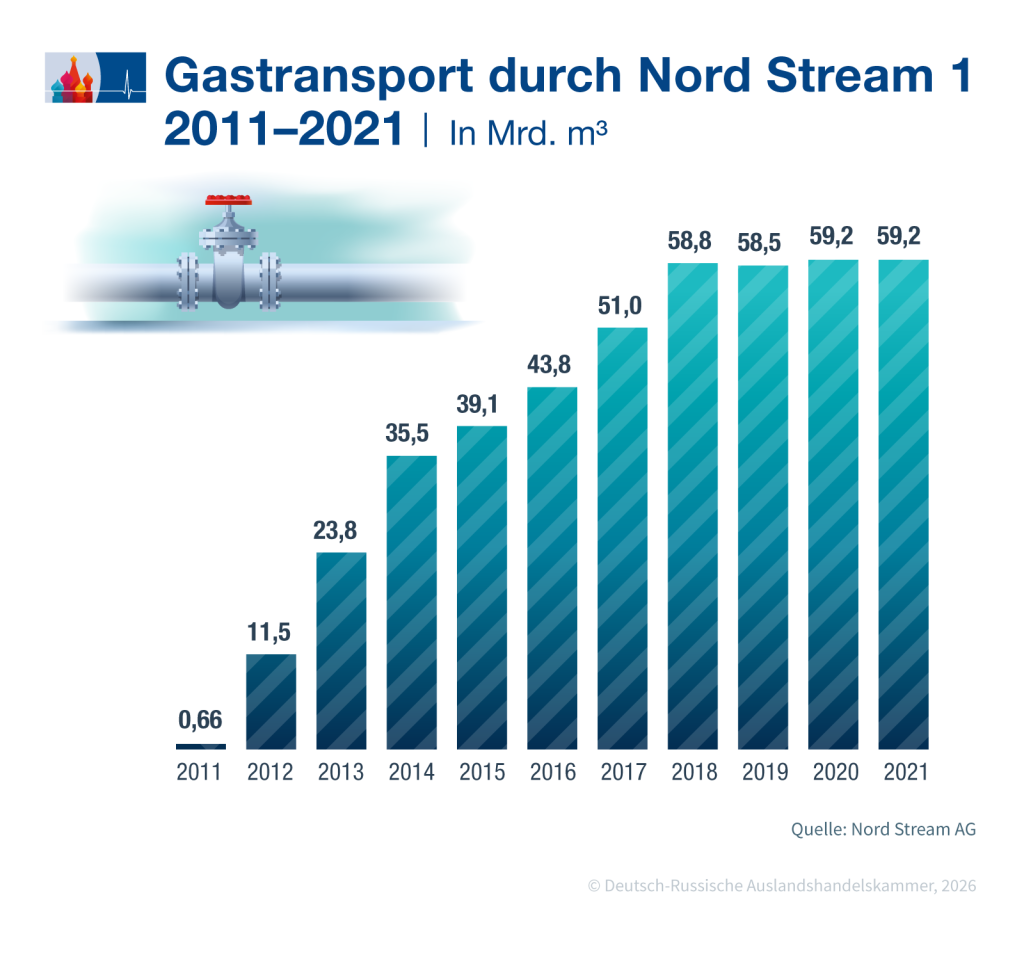
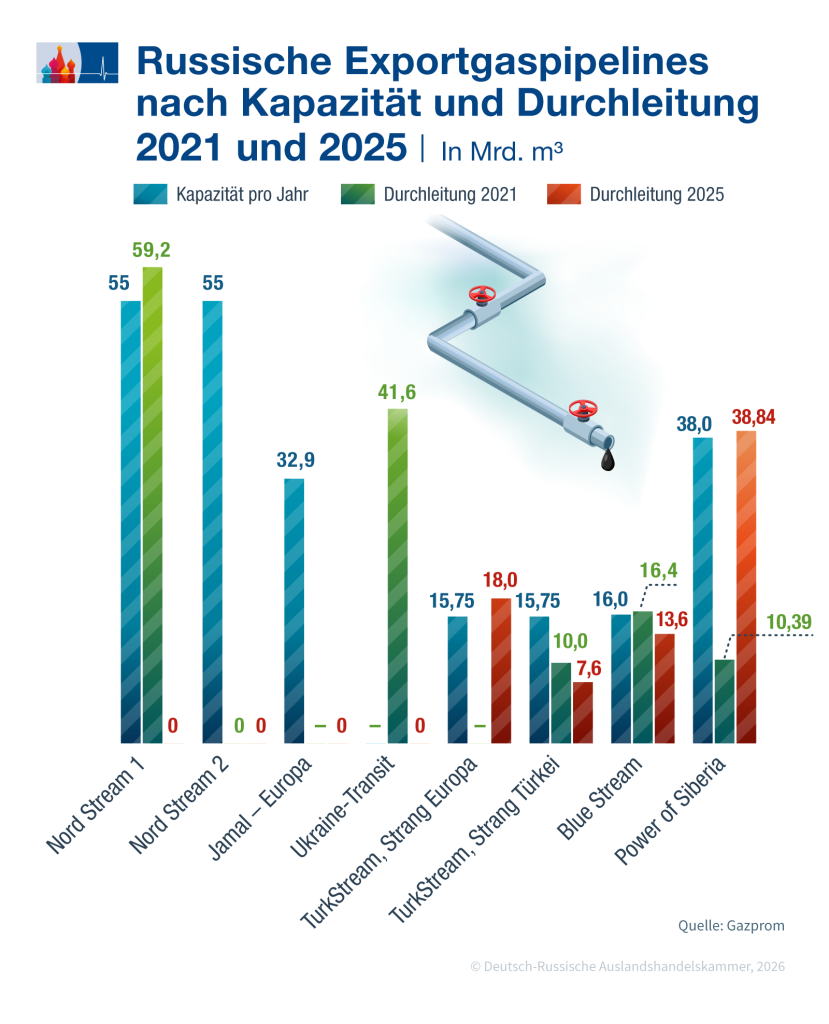
Before 2022, Nord Stream 1 was Germany’s most important gas pipeline. According to the operating company Nord Stream AG, it transported 59.2 billion cubic meters of gas in 2021. The pipeline thus carried about half of the natural gas Germany needed for energy production, reported the legal portal LTO on the first day of the trial against a Ukrainian citizen. He is standing trial at the Hamburg Higher Regional Court as the alleged mastermind behind the explosion that destroyed three Nord Stream pipelines.
Imported gas was inexpensive before the crisis. On average from 2015 to 2020, one terajoule of imported natural gas cost 4,574 euros at the German border, according to data from the Federal Office for Economic Affairs and Export Control (BAFA). That amounts to 16.5 euros per MWh. Nord Stream 2 was supposed to supply an additional 55 billion cubic meters starting in 2022, but it never went into operation.
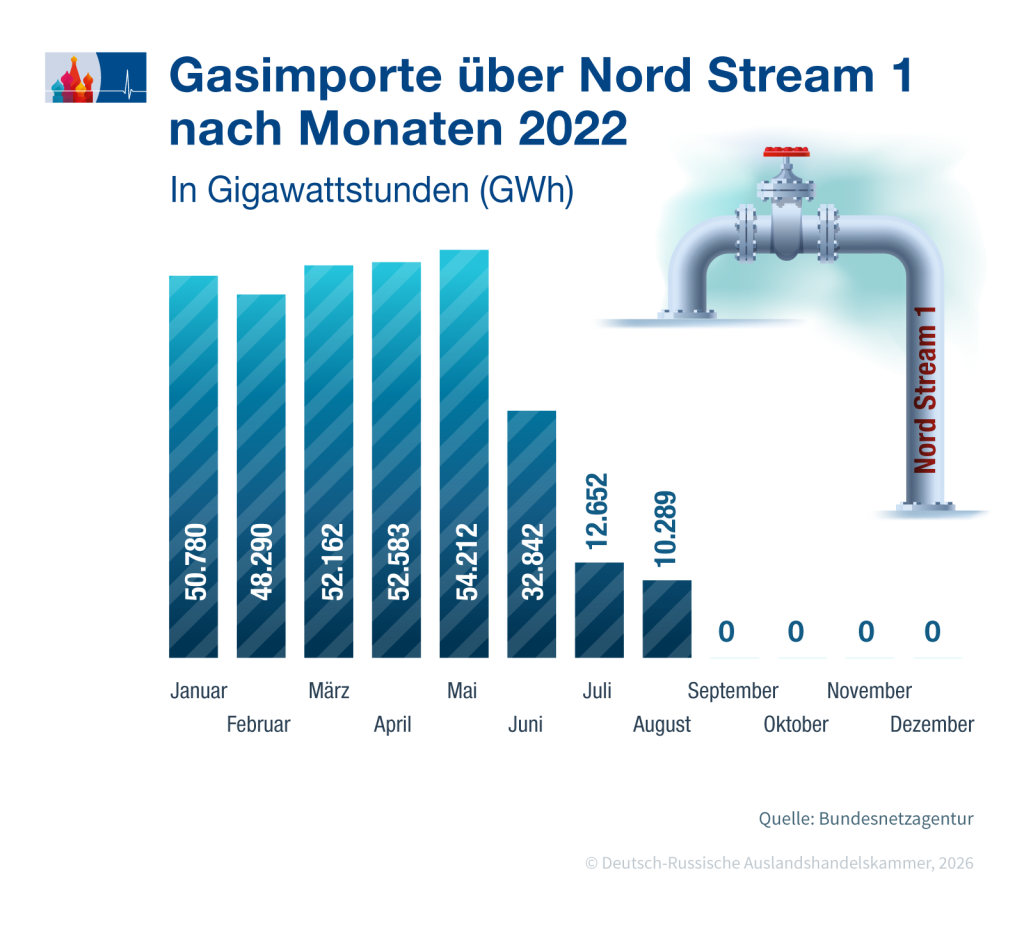
In the summer of 2022, the Russian gas monopoly Gazprom curtailed deliveries via Nord Stream 1. In May, 54,212 gigawatt-hours (GWh) still reached Germany; in August, the figure was 10,289 GWh, according to daily figures from the Federal Network Agency. Starting in September, no gas flowed at all. On September 26, 2022, explosions damaged three of the four lines of Nord Stream 1 and 2. Only Line B of Nord Stream 2, with an annual capacity of 27.5 billion cubic meters, remained intact.
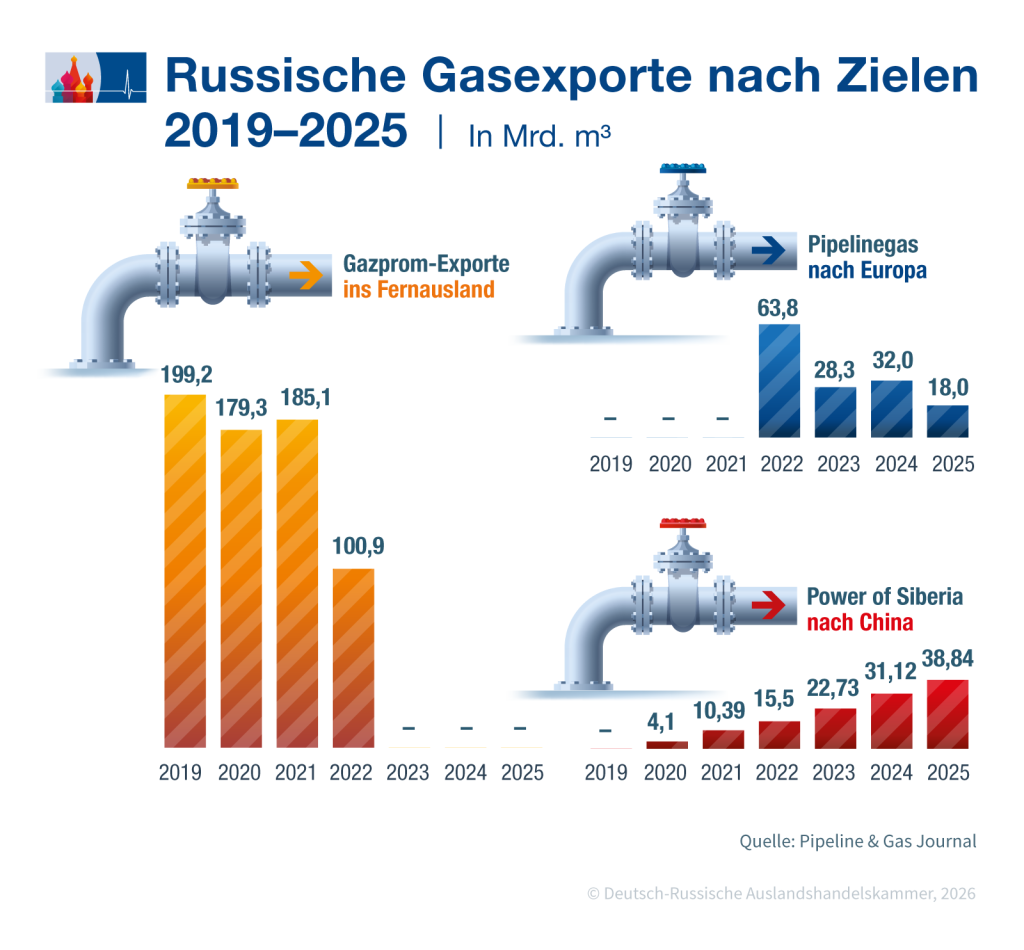
Europe replaced Russian pipeline gas primarily with liquefied natural gas (LNG). EU imports from Russia fell from more than 150 billion cubic meters in 2021 to 36 billion cubic meters in 2025, while supplies from the U.S. rose from 18.9 to 75.6 billion cubic meters, according to an overview from the Council of the European Union. Russia’s share of the EU’s imported pipeline gas fell from about 40% in 2021 to about 6% in 2025. When liquefied natural gas is included, Russia still accounted for about 12% of EU gas imports in 2025. LNG’s share of European gas consumption grew from less than 20% to nearly 45%, according to the International Energy Agency (IEA). As a result, the price of gas in Europe today is directly linked to the global market for liquefied natural gas.
What the Gas Crisis Has Cost Germany
Since 2022, Germany has been paying significantly more for its gas than before the crisis. Compared to the pre-crisis price of 16.5 euros per MWh, the additional costs from January 2022 through September 2026 total around 134 billion euros—equivalent to about 1,600 euros per resident. The most expensive year was 2022, at 59 billion euros. From 2023 to 2025, the additional costs ranged from 17.5 to 21.6 billion euros each year, and from January through September 2026, another 17 billion euros were added.
The calculation by the German-Russian Chamber of Foreign Trade is simple: for each year, it multiplies gas consumption by the difference between the current import price and the pre-crisis price. The consumption data comes from the Federal Network Agency. Consumption stood at 847.5 TWh in 2022, 812 TWh in 2023, 845 TWh in 2024, and 864 TWh in 2025; from January through September 2026, it currently stands at 592.6 TWh. The import price is provided by the Federal Statistical Office. In 2022, imported gas cost an average of 86.1 euros per MWh—more than five times as much as before the crisis. From 2023 to 2025, the price fell to between 37 and 43 euros; from January through August 2026, it rose again to 45.1 euros. The average price from 2015 to 2020 serves as the pre-crisis price. If inflation is factored in using the Consumer Price Index from the Federal Statistical Office, this pre-crisis price in 2026 would be 21.1 euros, and the additional costs would drop to around 120 billion euros.
The Federal Statistical Office only tracks pipeline gas, excluding LNG; its import price is therefore an approximation for the entire market. The calculation does not account for production shortfalls or losses in economic output. The loss of Russian gas is not the sole reason for the price increase. Storage shortages, the post-pandemic recovery, and, most recently, the Iran conflict also drove up the price. In 2022, the tighter supply had the greatest impact: supply and storage shocks together accounted for more than two-thirds of the price increase, according to a study by the European Central Bank (ECB).
Gas has become drastically more expensive for industry. According to Eurostat, the EU’s statistical office, medium-sized industrial customers paid 6.82 cents per kWh (excluding VAT) in the first half of 2026—more than twice as much as the 3.19 cents paid in the first half of 2021.
How a Nord Stream restart would affect gas prices
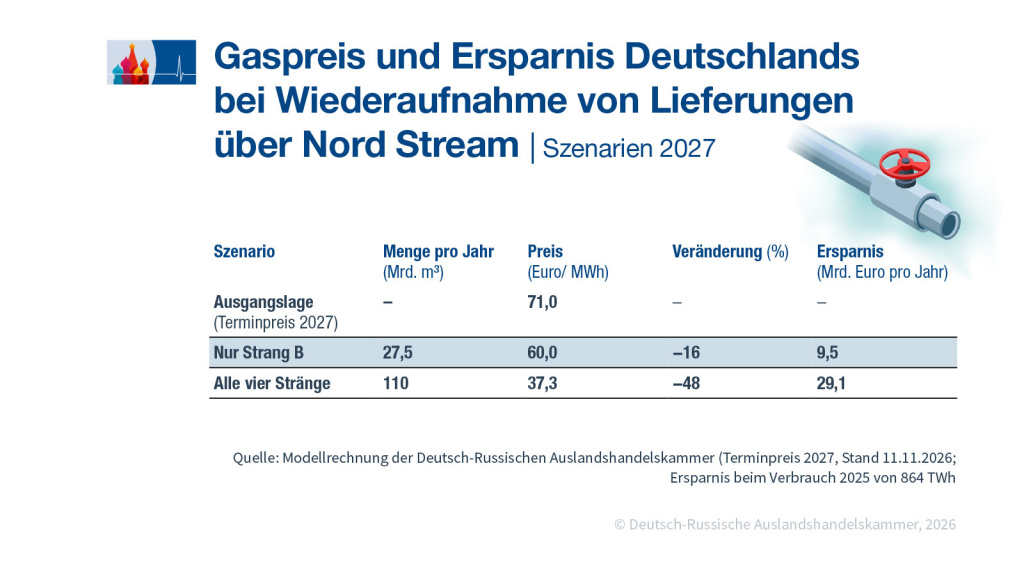
The German-Russian Chamber of Foreign Trade has calculated two scenarios for the resumption of deliveries following a ceasefire. The starting point is the forward price for gas in 2027 of 71 euros per MWh, according to the BDEW, as of November 11. At the end of October, it was even as high as 81.1 euros. This is the price that traders are already agreeing upon today for deliveries next year. It indicates the price level the market expects for 2027.
In the first scenario, gas flows again through the intact Line B of Nord Stream 2, meaning up to 27.5 billion m³ per year. This volume is not limited to Germany or the EU. Because Europe competes with buyers in Asia for liquefied natural gas (LNG), this volume affects a common market of approximately 791 billion cubic meters. Line B would bring about 3.5% more gas into this market. The next section, “The Restart Model in Detail,” explains the calculation in detail.
Because heating systems, power plants, and factories can hardly switch to other energy sources at short notice, the gas price reacts strongly to any change in volume. According to the Chamber’s model calculation, a 1% increase in gas supply lowers the price by about 5%. The European gas price would thus fall to around 60 euros per MWh, a reduction of 16%. With consumption at 2025 levels, Germany would save around 9.5 billion euros per year. A household with an annual consumption of 20,000 kWh would, in theory, pay about 220 euros less net per year, assuming that utilities would pass on the full reduction to consumers.
In the second scenario, 110 billion m³ would flow through all four lines—the amount originally planned when construction of Nord Stream 2 began. To achieve this, the damaged pipelines would have to be repaired. Restoring the pipelines would take a considerable amount of time—up to three years, according to an estimate by Walerio Andrianow of the Moscow Financial University. If all four pipelines were used, the gas price would fall by 48% to around 37 euros per MWh, according to the model calculation. Germany would save 29.1 billion euros per year.
How much a restart could yield depends heavily on the starting price. If the market normalizes after the Hormuz crisis to the 2025 wholesale level of 36.4 euros per MWh, the savings would be smaller. Scenario B would then lower the price to just under 31 euros, saving Germany 4.9 billion euros per year. With all four scenarios, the price would fall to around 19 euros, resulting in savings of approximately 15 billion euros per year.
The Restart Model in Detail
The extent to which additional gas drives down the price depends primarily on the size of the market into which it flows. Europe is no longer a closed gas market. In 2025, the EU sourced nearly half of its gas imports as liquefied natural gas (LNG) via tankers—146 out of 311 billion cubic meters—according to the LNG report by the EU regulatory agency ACER. Buyers in Japan, South Korea, and China are also bidding for the same tanker shipments. The European gas price is therefore determined in competition with Asia.
If gas flows through Strand B, Europe needs less liquefied natural gas. The tankers that become available head to Asia, where prices also fall. The additional volume is thus distributed across the entire interconnected market. The Chamber model divides this market into two blocks. The first block comprises the EU’s total gas demand of 340 billion cubic meters in 2025. This includes pipeline gas from Norway, as well as LNG from the U.S. and gas from domestic production. The second block is the liquefied natural gas consumed outside the EU. According to ACER, global LNG consumption stood at 597 billion cubic meters, of which 146 billion cubic meters were consumed by the EU. That leaves 451 billion cubic meters for the rest of the world. Together, these two blocks make up a market of 791 billion cubic meters. Nothing is double-counted here, since the EU’s LNG is already included in the first block.
Line B can supply up to 27.5 billion m³ per year. Divided by 791 billion m³, this amounts to 3.48%, or, rounded, 3.5% more gas in the market. The choice of reference base determines the result. If the volume were based solely on the EU, it would add 8.1%, and the price would fall by about 32% according to the calculation explained below. This overstates the effect because it overlooks the balancing effect of tankers. If the calculation were based on the entire global gas market, the effect would be too small. The domestic markets of the U.S., Russia, and China are hardly influenced by the European price.
The extent to which the price reacts to additional volumes is determined by price elasticity. It indicates the percentage change in demand when the price rises or falls by 1%. A hypothetical example illustrates this: A convenience store sells 100 bottles of Coca-Cola per day at 1 euro each. If the owner raises the price by 10% to 1.10 euros, many customers will switch to Afri Cola or Fanta, which are sitting right next to it in the refrigerator. He will then sell only 90 bottles of Coca-Cola—10% fewer. Demand falls as sharply as the price rises. The price elasticity is 1. If the value is greater than 1, demand is considered elastic. If it is less than 1, it is considered inelastic: customers then buy almost the same amount despite higher prices.
With natural gas, there is no simple alternative like there is with cola. A natural gas heating system cannot be replaced overnight, and a chemical plant cannot switch to electricity on short notice. In the Chamber model, the elasticity is therefore only 0.2. If the price of natural gas rises by 10%, demand falls by 2%. This figure summarizes how consumers and suppliers collectively react to the price. For the Neustart calculation, the model flips the question: How much must the price fall for the market to absorb 1% more natural gas? The answer is 5%, because 1 divided by 0.2 equals 5. This is the basis for the rule of thumb of approximately a 5% price change for every 1% change in volume. For Scenario B, this roughly amounts to 3.5 times 5, or 17.5%. The exact figure is just under 16%, because the rule of thumb is only accurate for small increments. The gas price would thus fall from 71 to around 60 euros per MWh.
In the short term, price elasticity ranges from 0.22 to 0.24 for natural gas, from 0.21 to 0.23 for electricity, and from 0.23 to 0.25 for gasoline, according to an analysis by economists led by Xavier Labandeira of the University of Vigo. The 0.2 in the Chamber model is slightly below the short-term values. A higher value would dampen the price effect; the lower end of the range therefore also assumes a value of 0.3.
The Chamber model derives the elasticity for natural gas from the year 2022. At that time, deliveries of Russian pipeline gas to Europe fell from 142 billion m³ to 64 billion m³, according to the Oxford Institute for Energy Studies. The annual average exchange price for gas rose from 47 to 132 euros per MWh, according to converted data from the World Bank. The average import price was lower at 86.1 euros because a portion of the supplies was covered by long-term contracts under older terms.
Not all of the price increase can be attributed to the lack of Russian gas. In the same year, Europe also rushed to fill its storage facilities ahead of winter. According to a study by the European Central Bank (ECB), supply and storage shocks together account for more than two-thirds of the increase. The German-Russian Chamber of Foreign Trade therefore cautiously attributes only half of the increase to the supply disruption. According to this, a roughly 10% reduction in gas supply would have caused prices to rise by about 68%. This results in an elasticity of 0.2—that is, the rule of thumb of approximately a 5% price change for every 1% change in volume.
If the supply shortfall is attributed to only one-third of the increase, the price reacts less strongly, and Line B would lower it to only around 63 euros. If attributed to two-thirds, it would fall to around 57 euros. The savings for Germany thus range from 6.5 to 12.4 billion euros. With all four scenarios, they range from 21.4 to 35.4 billion euros.
The savings relate to the wholesale price; end customers will feel them with a time lag and depending on their contracts. It also remains unclear how much gas Russia could actually supply, as the country has redirected a portion of its exports to Asia.
Estimates from Research Institutes and Banks
Related calculations by renowned economic research institutes cite figures comparable to those in the additional cost estimate by the German-Russian Chamber of Foreign Trade. German spending on imported energy rose by “just under 65 billion euros” in 2022 compared to the previous year, for ores, crude oil, natural gas, and coal combined, according to the Cologne Institute for Economic Research (IW). German losses due to higher payments for gas from abroad are likely to “amount to a cumulative total of about 100 billion euros over the years 2021 through 2023,” according to estimates by five leading German economic research institutes—including the Munich-based ifo Institute and the German Institute for Economic Research (DIW)—in their joint economic forecast published in the fall of 2022. The costs to the economy as a whole are even higher. In December 2022, the Kiel Institute for the World Economy calculated that, based on its forecast from winter 2021, German economic output would decline “by 180 billion euros in 2022 and 2023 alone.” The Cologne Institute for Economic Research (IW) estimates the shortfall in economic output compared to the pre-pandemic trend for the years 2020 through 2025 at 940 billion euros, but does not attribute it to any single cause, such as higher gas prices.
Most estimates regarding the impact on prices of a restart of the Nord Stream pipelines date from the spring of 2025, when U.S.-led peace talks began. If peace were to be achieved between Russia and Ukraine, European gas prices could fall by up to 50%, according to an estimate by the U.S. investment bank Goldman Sachs in February 2025, as reported by the information service Quantum Commodity Intelligence. In the event of a peace agreement, the Dutch bank ABN AMRO expected a decline in the gas price “of at least 15%” in March 2025, based on its forecast of around 33 euros for the second quarter. This is in the same range as the Chamber’s result for Scenario B.
In its most far-reaching peace scenario, the major Dutch bank ING projected approximately 82 billion cubic meters of additional gas from Russia in March 2025, 73 billion cubic meters via pipeline through Ukraine and the Yamal pipeline, as well as 9 billion cubic meters of LNG. These calculations did not include potential Nord Stream deliveries. According to ING, the price would fall to the short-term marginal costs of American LNG, “slightly above 18 euros per MWh.” Compared to ING’s forecast at the time of around 45 euros, that would represent a price reduction of about 60%. The Chamber model puts the figure at just under 40% for the same volume and uses a more conservative estimate.
The Viennese energy consultant Benigni goes significantly further. If as much Russian gas were to flow as is currently technically possible, the gas price in Europe would fall “from the current 100 euros per megawatt-hour (MWh) to 30 euros,” he told the newspaper *Welt* in early November. This refers to transit through Ukraine, the Yamal pipeline through Poland, and the intact Nord Stream pipeline. If liquefied natural gas from Qatar—which is currently unavailable due to the war in Iran—were added to the mix, the price would drop below 20 euros, according to Benigni. A price of 30 euros per MWh corresponds to just over 300 euros per 1,000 m³. Europe purchased gas from Russia at this price—and often even cheaper—in the decade leading up to 2022.
Russian gas would have a significant price advantage only until 2026, because the global market would be tight until then, write Chi Kong Chyong and James Henderson in a 2024 study. After that, the expansion of LNG and Europe’s climate goals would make it “economically irrelevant.” However, it now appears that the market will remain tight longer than expected. Due to the Hormuz crisis, the relieving effect of the new LNG volumes is being delayed, writes the International Energy Agency (IEA) in its July gas market report.
What Stands in the Way of a Restart
Since the July 2025 sanctions package, the EU has banned any transactions related to Nord Stream 1 and 2, from completion through operation. Regulation (EU) 2026/261 also phases out imports of Russian natural gas; long-term pipeline contracts will be banned starting in the fall of 2027, according to the Council of the European Union. Russia has used energy as a weapon, said Paula Pinho, chief spokesperson for the European Commission, on October 28. “We’ve paid the price for this, so we won’t forget it,” she is quoted as saying by the Berliner Zeitung.
For the German federal government, “the question of commissioning Nord Stream 2 therefore does not arise,” according to its response to the Bundestag, published on October 19. The Federal Network Agency’s certification process is on hold; in February 2022, the then-federal government—composed of the SPD, the Greens, and the FDP—halted it. Without certification, the intact Line B of Nord Stream 2 cannot go into operation, even though it would likely be technically ready to start within a few weeks, as Russian analyst Valery Andrianov, for example, says.
The other routes are also blocked. Gazprom no longer has transport rights for the Polish section of the Yamal-Europe pipeline, which has a capacity of 33 billion cubic meters. Transit through Ukraine would require an agreement with Kyiv and new supply contracts with European customers. Added to this are claims for damages against Gazprom by European corporations amounting to tens of billions. Uniper alone won more than 13 billion euros in an arbitration court. With new deliveries, creditors would once again have access to Gazprom’s revenues in Europe.
Source: German-Russian Chamber of Foreign Trade, “Nord Stream Could Save 9.5 Billion Euros Annually, but No Restart in Sight,” November 16, 2026.
This article was prepared for the German-Russian Chamber of Foreign Trade.
Earlier coverage: Russia
- Russia: Business trips cost 63,000 rubles per person · November 15, 2026
- Russia: Tunnel through the Bering Strait for $205.4 billion · November 14, 2026
- Xenia Sobchak: Ban on Starting a Business in Russia Until 2029 · November 13, 2026
- Russia: The 18 Richest Russians Lose $25 Billion · November 13, 2026
The day's most important Russian economic stories. Free, in your inbox three times a week.
Mon, Wed, Fri. Double opt-in, unsubscribe anytime. By subscribing you consent to the processing of your email address as described in our Privacy Policy.