Water Management in Central Asia
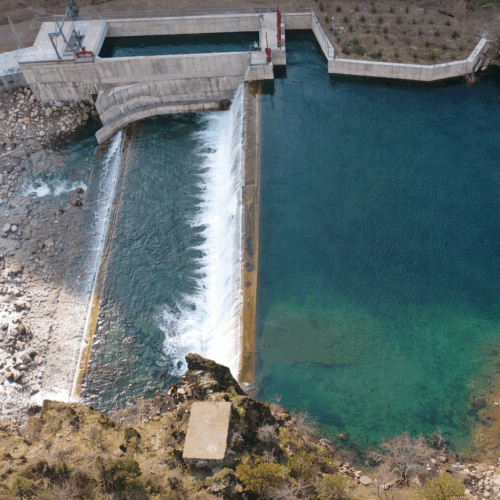
Water scarcity is increasingly becoming one of the greatest challenges to sustainable development in Central Asia. Experts from the United States warned of shortcomings in regional water resource management and discussed how the United States could support the countries in the region in addressing these challenges.
Dania Arayssi, coordinator of the Central Asia Center at the New Lines Institute for Strategy and Policy in Washington, emphasized that water issues are now among the key challenges facing the region’s governments. They affect not only economic development but also social stability.
The institute supports the “Silk Seven Plus” concept, which envisions the creation of a more closely integrated Central Asian economic community. Greater cooperation on water management could serve as an important catalyst in this regard.
At the same time, the United States is showing growing interest in deepening its economic ties with Central Asia. This is indicated, among other things, by the C5+1 summit that took place last year in Washington. Observers see this as the foundation for additional U.S. investment in industry, IT, agriculture, and infrastructure.
“The development of AI applications, data centers, and modern energy projects requires significant amounts of water,” said Arayssi. “That is why there is great interest in finding long-term solutions to water issues. Effective water management can significantly strengthen Central Asia’s economic potential.”
Lack of Enforcement Weakens Existing Institutions
In principle, regional structures for joint water management already exist. These include the International Fund for Saving the Aral Sea (IFAS) and the Intergovernmental Coordination Commission for Water Management in Central Asia (ICWC).
However, according to Arayssi, both institutions lack the ability to effectively enforce the implementation of their decisions.
“As long as these organizations lack effective mechanisms to monitor and enforce their decisions, they will only be able to fulfill their tasks to a limited extent,” she explained.
Wilder Alejandro Sanchez, president of the consulting firm Second Floor Strategies in Washington, shares a similar view.
“A regional water commission can be an important step. However, it is crucial that its recommendations are actually implemented by governments,” said Sanchez.
China Plays a Key Role
Arayssi also highlighted China’s importance for the future of water in Central Asia. Beijing draws significant amounts of water from transboundary rivers to irrigate agricultural land in Xinjiang. This exacerbates water shortages, particularly in neighboring Kazakhstan.
Astana has been striving for years to engage in more intensive dialogue with China regarding the shared use of water resources.
“If China truly wants to be a strategic partner of Kazakhstan, it should show greater willingness to develop joint solutions to water issues,” said Arayssi.
Outdated Infrastructure Exacerbates the Crisis
In addition to institutional weaknesses, the region’s water management is particularly burdened by dilapidated infrastructure. Experts estimate that up to 40% of irrigation water is lost due to outdated systems, leaks, and unpaved canals.
According to Arayssi, modern technologies from the U.S. and Europe could help significantly reduce water consumption while also curbing the ongoing desertification of agricultural land.
Sanchez pointed out, however, that the discontinuation of many programs by the former U.S. Agency for International Development (USAID) has complicated international aid efforts.
“Many projects aimed at improving water security are relatively inexpensive and would benefit both the population and relations between Central Asia and the U.S.,” he said. “Unfortunately, environmental and water issues are not currently a top priority in Washington.”
International Models for Central Asia
Experts emphasize that water and energy policies in Central Asia are closely intertwined. Therefore, international models could offer valuable guidance.
As an example, Arayssi cited the Tennessee Valley Authority (TVA) in the U.S. Founded in the 1930s, the organization continues to successfully coordinate water management, energy production, and regional development across multiple states.
A comparable European model is the International Commission for the Protection of the Danube River (ICPDR), which coordinates the protection and sustainable use of a transboundary river system.
Sanchez also pointed to other successful international collaborations, including the joint management of the Dniester River basin by Moldova and Ukraine, as well as the cooperation between Peru and Bolivia in protecting Lake Titicaca.
International experience has shown that sustainable water management is only possible through long-term planning, stable financing, and the consistent implementation of joint decisions. Support from the United States, the European Union, and international financial institutions could provide important impetus. However, the actual responsibility lies with the Central Asian states themselves.
“Solutions cannot be imposed from the outside,” said Arayssi. “Ultimately, the Central Asian countries themselves must make the difficult decisions and act together.”