Uzbekistan is banking on tourism as a driver of growth
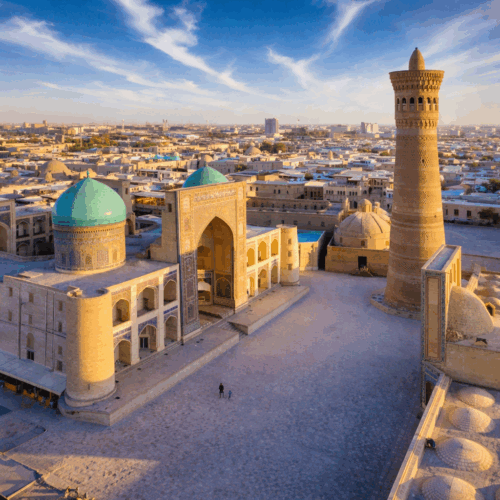
The Uzbek government increasingly views tourism as one of the most important drivers of economic growth, investment, and employment. Backed by infrastructure investments worth billions, comprehensive visa reforms, and the development of Tashkent into a regional aviation hub, the country aims to establish itself as Central Asia’s leading travel destination.
At the Tashkent International Investment Forum (TIIF 2026), government officials, aviation experts, and investors made it clear that tourism is no longer viewed merely as a cultural sector, but rather as a strategic industry with significant potential for economic diversification.
“Today, tourism is not only one of the fastest-growing economic sectors, but also a key driver of investment, new jobs, regional development, and international cooperation,” said Abdullaziz Akkulov, Chairman of the Uzbek Tourism Committee.
Record Growth in Visitor Numbers and Revenue
The figures underscore the sector’s momentum. In 2024, Uzbekistan welcomed approximately 8.2 million foreign visitors—up from 6.6 million the previous year. This growth continued in 2025: In the first five months, the number of foreign tourists rose by 48.2% to 4.2 million.
Akkulov stated at the TIIF that visitor numbers in the first five months of 2026 had risen again by 27% to 5.5 million. In the long term, the government aims to attract between 15 and 20 million international tourists per year and generate tourism revenue of up to 15 billion U.S. dollars.
Tourism now accounts for about 3% of the gross domestic product. Although this figure is still well below the global average of about 10%, the authorities see significant growth potential in this sector.
The number of visitors from China, India, Turkey, and South Korea is growing particularly strongly, while travelers from the neighboring countries of Kazakhstan, Kyrgyzstan, and Tajikistan continue to account for the largest share.
Tourism exports have also risen sharply: According to Akkulov, revenue from tourism services has increased from 531 million US dollars in 2017 to around 8 billion US dollars today.
Reforms as the Foundation of Success
The reforms introduced by President Shavkat Mirziyoyev since 2016 have played a significant role in this development.
“What we lacked before 2016 was political will,” said Akkulov. “Thanks to its policy of openness, the new Uzbekistan has opened its doors wide to the international community.”
Among the most important measures are comprehensive visa liberalization measures. Uzbekistan now grants visa-free entry to citizens of more than 65 countries and has simplified entry procedures for numerous other countries. In addition, new visa-free agreements have been signed, including one with China. Starting in 2026, U.S. citizens will also be able to enter the country visa-free for stays of up to 30 days.
At the same time, the government has intensified its international marketing campaigns and closely linked the tourism sector to its strategy for attracting foreign direct investment.
Billions Invested in Infrastructure
To cope with the strong growth in visitor numbers, Uzbekistan has invested approximately 6.5 billion U.S. dollars in the expansion of its tourism infrastructure over the past eight years.
Among other things, these funds were used to create approximately 130,000 hotel rooms, build 20 resort complexes, and modernize numerous tourist facilities. In addition, hotel developers received government subsidies totaling more than 22 million US dollars.
At the same time, the government is pursuing the goal of broadening the range of tourism offerings. In addition to the historic centers of Samarkand, Bukhara, and Khiva, targeted investments in eco-tourism, health tourism, pilgrimage tourism, and mountain tourism are being promoted.
Digitalization is also playing an increasingly important role. A national tourism platform is intended to consolidate services and modernize the management of the sector in the future. Furthermore, plans are in place to establish an international office for “Tourism along the Silk Road” in Samarkand.
Aviation as the Key to the Tourism Strategy
Aviation plays a central role in the development plans. For the government, improved international connectivity is crucial to achieving its ambitious growth targets.
“The most important tool is aviation,” said Mario Ebcim, Director of Sales for Eurasia and India at Boeing Commercial Airplanes.
The focus is on developing Tashkent into an international hub connecting Europe, Asia, the Middle East, and India. The capital’s new airport is expected to significantly increase capacity and, in the long term, compete with established hubs such as Istanbul.
At the same time, the government is preparing for the initial public offering (IPO) of the national airline, Uzbekistan Airways. In addition, international flight connections are being continuously expanded.
According to industry representatives, Tashkent could become not only a major passenger hub in the future, but also an important cargo and logistics hub along the Middle Corridor between Europe and Asia.
Establishing the Uzbekistan Brand Internationally
In addition to infrastructure investments, experts also view international marketing as a key factor for success.
The historic cities of Samarkand and Bukhara enjoy an exceptional reputation worldwide. Now the government is seeking to transform this cultural heritage into a modern tourism brand.
Digital technologies and artificial intelligence are playing an increasingly important role in this effort. New marketing strategies, social media, and film tourism programs are intended to help strengthen international awareness of Uzbekistan and attract additional visitors.
Tourism as a Symbol of Economic Transformation
Despite all the progress, Uzbekistan’s international profile remains limited outside the region. Many potential travelers still associate Central Asia with isolation or insecurity.
The government, however, sees this primarily as an opportunity. With four UNESCO World Heritage Sites, a strategic location between Europe and Asia, and an increasingly open economy, the country has attractive conditions for further growth.
For policymakers, tourism is now far more than just a tool for promoting cultural heritage. It is considered a key sector for export revenues, investment, employment, and the long-term diversification of the economy.