Small Interest Rate Hike Dampens Business Owners' Hopes
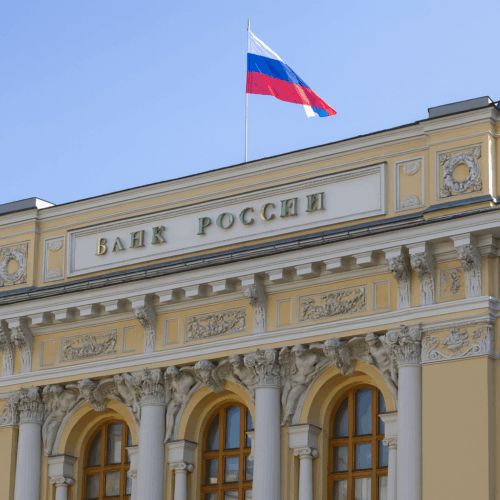
The latest interest rate decision has caused disappointment in business circles. The Russian Central Bank has cut the deposit rate from 14.50% to 14.25% for the ninth consecutive time. However, most analysts and business leaders had expected a cut of 0.5 percentage points. Alexander Shokhin, president of the Russian Union of Industrialists and Entrepreneurs (RSPP), had even called for a rate cut of one percentage point ahead of the Russian Central Bank’s meeting. “To prevent the Russian economy from freezing up completely, companies no longer need a thaw—they need the warmth of summer,” Schochin explained. The RSPP head described the latest key interest rate cut as “disappointing.”
Central Bank Governor Elvira Nabiullina announced her decision immediately following Friday’s Central Bank meeting (pictured). Nabiullina stated that the scope for further interest rate cuts had narrowed, as credit growth in Russia had increased significantly in recent months.
Central bank officials pointed to persistent inflation risks, including the decline in fuel production in Russia amid Ukrainian drone attacks on Russian oil refineries. Nabiullina explained at the press conference that the rise in gasoline prices had been “one of the main reasons” for the moderate cut in the key interest rate by just 25 basis points. According to Rosstat data from June 15, annual inflation rose last week from 5.51% to 5.63%. The central bank’s inflation target is 4%. The central bank forecasts an inflation rate of 4.5–5.5% for this year.
Growth Forecasts Vary Widely
According to the Central Bank, the Russian economy grew moderately in the first half of 2026, the Central Bank stated. The central bank estimates Russian economic growth at 0.3% for the period from January to April. For the first half of the year as a whole, the central bank expects economic growth of around 0.5%. Among other factors, the central bank cites the deteriorating outlook for the global economy and price pressures stemming from geopolitical tensions.
Renowned German economic institutes are presenting more optimistic growth forecasts. The Berlin-based “German Institute for Economic Research” and the “Leibniz Institute for Economic Research Halle” expect the Russian economy to grow by 1% in 2026—0.1 percentage points more than in their spring forecasts. The Eurasian Development Bank shares this assessment. In contrast, the Kiel Institute for the World Economy (IfW) and, above all, the Munich-based ifo Institute have sharply lowered their forecasts for Russia’s economic growth this year in their “summer forecasts.” The IfW revised its forecast down from 1.0% to just 0.2%.
The ifo Institute even expects Russia’s economy to enter a recession this year. According to the forecast, real gross domestic product will decline by 0.7% compared to the previous year. However, following this year’s “plunge” into recession, the ifo Institute expects a rapid recovery of the Russian economy in 2027. According to this forecast, Russia’s real gross domestic product will rise by 2.0%. The other German institutes, on the other hand, expect GDP growth next year to range between 0.5% (IfW Kiel) and 1.2% (IWH Halle).
Experts on the Interest Rate Decision
Natalia Orlova, chief economist at Alfa Bank, commented diplomatically on the interest rate decision: “The good news is that interest rate cuts are continuing. The bad news is that the cut has become smaller—which reflects the growing pro-inflationary risks in the economy.”
Economist Kirill Rodionov sees the modest cut in the key interest rate as a solution to a dilemma facing the central bank. On the one hand, he noted, the central bank cannot lower key interest rates quickly due to the increased inflation risks resulting from the easing of fiscal policy. On the other hand, however, it could not ignore the calls for key interest rate cuts that were voiced during a meeting with Russian President Vladimir Putin. “The risks of a further increase in the budget deficit will, in any case, make the central bank’s task even more difficult,” Rodionov emphasizes.
According to Sofia Donets, chief economist at T-Investments, the modest rate cut is a sign that the central bank’s “conservatism” has hardened. If this slow pace of key rate cuts continues through the end of the year, the key rate will remain above 13% in 2026.
According to the investment platform InvestFuture, the central bank’s most important signal is hidden in its statements on the budget deficit. The central bank had already drawn a red line back in April: If the Ministry of Finance continues to prop up demand through spending, the central bank would have to maintain high key interest rates, according to InvestFuture analysts.
Growing Budget Concerns
In its baseline scenario, the central bank assumed that Russian fiscal policy would contribute to a slowdown in inflation over the medium term. “However, maintaining the structural budget deficit through 2029 will require a tighter monetary policy than envisaged in the baseline scenario,” the central bank officials explain with regard to future key interest rate decisions. In its April forecast, the central bank set the average key interest rate at 14–14.5%.
Even beforehand, the central bank had cited the government deficit as an argument against a rapid rate cut. The budget deficit amounted to 6 billion rubles (71.7 billion euros) in the first five months, compared with a projected figure of 3.77 billion rubles (45 billion euros) for the full year. Finance Minister Anton Siluanov has since acknowledged that a balanced budget is not expected until 2029, rather than next year. The deficit is driven by high government spending. This article was prepared for the German-Russian Chamber of Foreign Trade.