Gasoline Crisis in Russia
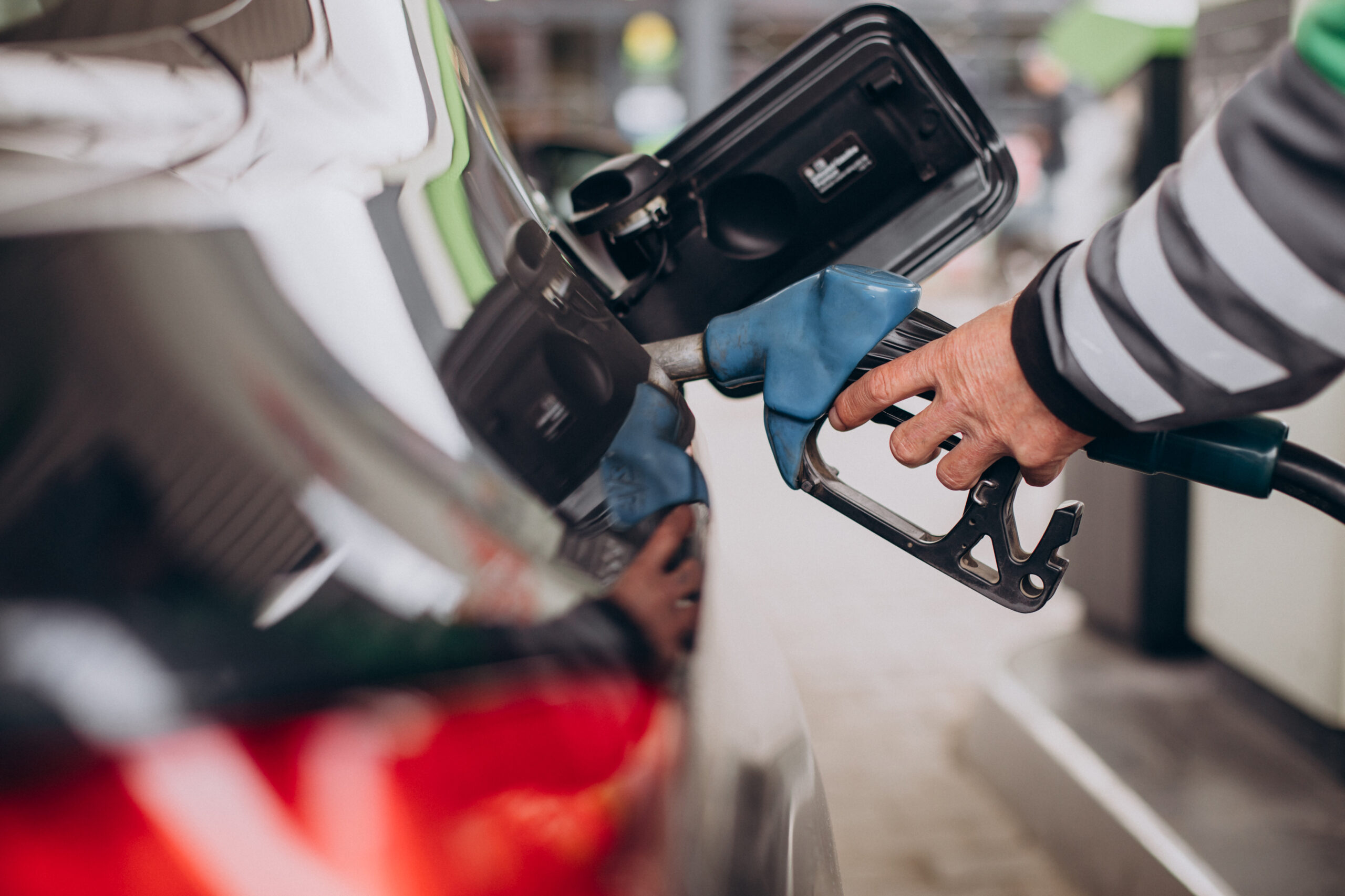
President Vladimir Putin acknowledged on Sunday that lines are forming at Russian gas stations. Drivers and businesses are unable to find the type of gasoline they need everywhere, Putin said during a government meeting on fuel supplies to Russia’s regions. Supply should be expanded, and the government has begun tapping into gasoline reserves, the president explained. He put the current level of state reserves at 1.7 million metric tons, which is only 4% below last year’s figure. At the same time, the Russian president emphasized that the country’s major refineries are currently operating at full capacity.
The government has also blamed panic buying for the shortage. Deputy Prime Minister Novak spoke of “artificially inflated demand of 20–30%.” There are sufficient gasoline reserves, and diesel is even in abundance. The government’s position is that the available fuel simply needs to be distributed more evenly among Russia’s regions. As of Monday morning, more than 40 Russian regions had at least partially restricted fuel sales, according to the business portal RBC.
Production Falls
Russian fuel statistics have been severely limited since May 2024. In April 2024, gasoline production totaled 3.4 million metric tons and diesel production totaled 6.9 million metric tons. For the full year 2024, government figures put production at 41.1 million metric tons of gasoline and 81.6 million metric tons of diesel, with these volumes referring to fuel meeting the Euro 5 environmental standard. The Perm-based consulting firm Alto Group (ACG) estimates diesel production, regardless of the environmental standard, at 84.5 million metric tons. The company does not provide figures for gasoline. There should be no shortage of diesel, as Russia exported about half of its production “in calmer times,” explains Igor Yushkov of the Russian Government’s Financial University. In contrast, 85% to 90% of the gasoline produced typically went to the domestic market.
The Reuters news agency reported, citing industry insiders, that Russia produced about 90,000 metric tons of gasoline per day in the week ending June 19. This puts production 25% below the level of June 2025 and 20–25% below the level of March 2026—that is, before the latest wave of Ukrainian drone attacks on Russian refineries began. Reuters sources estimated daily gasoline demand during the summer at at least 110,000 metric tons per day. The refinery in Moscow owned by the state-run oil company Gazprom Neft, which was attacked in mid-June, produced 2.9 million metric tons of gasoline and 3.2 million metric tons of diesel in 2024, the year for which the latest available data is available.
Rosstat now only publishes data on trends in the general category “oil products and coke” as part of industrial production. For May 2026, official statistics showed a decline of 13.5% compared to the same month the previous year and 2.3% compared to the previous month. In April, production was 9.1% below the level of the same period the previous year, and in the first five months of 2026, it was down 4.9%.
Prices Are Rising
According to official statistics, which Rosstat continues to publish, gasoline prices rose by 9.8% from the beginning of the year through June 22 and by 18% year-over-year. This is more than three times the general inflation rate of 5.82%. In the week of June 16–22 alone, gasoline prices rose by 3% nationwide, compared with a general weekly inflation rate of 0.25%. According to the Moscow-based fuel specialist OMT Consult, the price of gasoline at independent gas stations rose by nearly 14% from January through June 19, from 66.4 to 76.9 rubles (0.88 euros) per liter. At gas stations operated by major oil companies, prices rose by 4%, from 70.7 to 73.3 rubles (0.84 euros). At the same time, the wholesale price for 95-octane gasoline rose by 28% from the start of the year through June 17 to 75,400 rubles (863 euros) and for diesel by 34% to 73,000 rubles (835 euros) per metric ton, as reported by the business magazine Expert. Due to government price controls, gas stations cannot fully pass on the increased purchase prices to customers. Consequently, their profits shrank from 5.2 rubles per liter sold in mid-January to 1.9 rubles on June 19, reports the industry service Petromarket. For 92-octane gasoline, the margin has fallen from 6.1 rubles to just 0.3 rubles per liter.
Focus on Gasoline Imports
The Russian government also intends to alleviate the gasoline shortage through imports. Last week, the Duma passed a law under an expedited procedure that creates financial incentives for gasoline imports. India is considered the primary potential supplier; its gasoline prices and delivery terms serve as the benchmark in the law for determining the level of subsidies for imports from outside the Eurasian Economic Union. In May, India exported 930,000 barrels of petroleum products per day—the lowest level since October 2022, according to the Belgian industry service Kpler. This figure is equivalent to approximately 125,000 to 130,000 metric tons per day. Russia is already sourcing gasoline from Belarus. According to data from the St. Petersburg Stock Exchange, 51,360 metric tons of gasoline were sold there from June 1 to 19 at an average price of 125,000 rubles (1,430 euros) per metric ton. The price premium of about two-thirds compared to Russian gasoline can also be explained by the fact that these imports are exempt from the stock exchange’s price increase limits, which were most recently set at 0.01% per day. This article was prepared for the German-Russian Chamber of Foreign Trade.