From a Gas-Rich Country to the Energy Transition
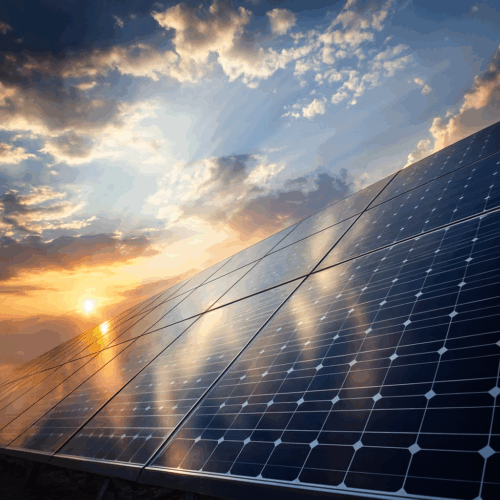
Uzbekistan is increasingly emerging as the engine of economic growth in Central Asia. The country’s economic development is usually attributed to macroeconomic reforms, an improved regulatory environment, and a more attractive investment climate. However, one of the country’s most profound structural changes receives far less attention: the transformation of the energy sector.
Uzbekistan is still regarded as a classic gas-based economy. While this remains true, it now only partially describes the reality.
The green transition is not primarily driven by climate goals, but rather by economic and geological realities. Declining natural gas production has become one of the key drivers for the diversification of electricity generation. As a result, renewable energy has become less of an ecological vision and more of an economic necessity. This is precisely why this transition is likely to be particularly sustainable in the long term: governments may change their climate policies, but energy security remains a permanent priority.
Declining Natural Gas Production Is Shaping Energy Policy
Natural gas continues to dominate Uzbekistan’s energy supply. Fossil fuels cover more than 95% of primary energy demand, while natural gas alone accounts for around 80% of total energy consumption and about 72% of electricity generation.
At the same time, however, natural gas production has been declining steadily for years. After peaking at 68.3 billion cubic meters in 2008, production is expected to reach only about 42.3 billion cubic meters by 2025.
It is noteworthy, however, that gas consumption has remained largely stable at around 50 billion cubic meters per year despite strong population and economic growth.
This was made possible by significant efficiency gains. The economy has increasingly shifted toward the service sector, gas-fired power plants have been modernized, the tariff structure has been reformed, and supply constraints have led to more efficient energy consumption. As a result, gross domestic product has been able to grow without a corresponding increase in natural gas consumption.
Since 2023, however, this balance has become more difficult to maintain, as Uzbekistan has since become a net importer of natural gas.
Large Reserves, but Declining Productivity
Uzbekistan does not fundamentally lack natural gas. Proven reserves continue to total more than 1.8 trillion cubic meters, making them among the largest in the world.
The problem lies rather in the aging of many production fields, declining output, and years of underinvestment. Even the government acknowledges that numerous fields operated by the state-owned company Uzbekneftegaz are largely depleted and require new investments and modern technologies.
For this reason, hydrocarbons remain an important component of energy policy despite the expansion of renewable energy.
One example of this is the production-sharing agreement worth approximately two billion U.S. dollars on the Ustyurt Plateau, in which SOCAR and BP, among others, are participating. It demonstrates that Uzbekistan remains an attractive location for international investment in oil and gas production.
Solar and wind energy are catching up rapidly
At the same time, the expansion of renewable energy is progressing at a remarkable pace.
The share of renewable energy in electricity generation rose from just 7% in 2021 to nearly 20% in 2025.
It is particularly noteworthy that this growth is almost entirely attributable to solar and wind energy. While renewable energy in Uzbekistan has long meant almost exclusively hydropower, solar and wind power will generate more electricity than hydropower plants for the first time in 2025.
Uzbekistan Overtakes Regional Competitors
Regional comparisons often underestimate this trend.
Kyrgyzstan, Tajikistan, and Georgia have traditionally had a higher share of renewable energy due to their natural hydropower resources. However, when considering only modern renewable energy sources such as solar and wind power, a different picture emerges.
By 2025, solar and wind power will already cover about 12% of electricity demand. As a result, Uzbekistan has overtaken countries such as Kazakhstan and Armenia within just a few years.
Investments at Record Pace
The expansion of generation capacity is also proceeding at an exceptionally rapid pace.
Installed power plant capacity has now risen to nearly 26 gigawatts. Renewable energy sources now account for about 30% of total installed capacity.
Solar and wind power plants alone have a capacity of more than 7.5 gigawatts. Nearly 90% of this capacity was commissioned as recently as 2024 and 2025.
Few emerging economies have expanded their renewable energy capacity at a comparable pace.
International investors are driving the expansion
This development is the result of a targeted strategy to attract international investors through transparent public-private partnerships.
Among the most important investors are companies such as ACWA Power, Masdar, EDF, and China Energy Engineering.
The total investment pipeline now stands at around 35 billion U.S. dollars—nearly a quarter of Uzbekistan’s gross domestic product and thus one of the largest investment drives for green technologies in Central Asia.
Installed Capacity and Actual Electricity Production
One important distinction should be noted here.
When the government states that clean energy already accounts for about 30% of the energy mix, this figure refers to installed capacity and not to actual electricity production.
Since solar and wind power plants naturally have lower capacity utilization rates than thermal power plants, their actual share of electricity generation is currently even lower.
Nevertheless, installed capacity is considered a key indicator of the future development of the electricity supply.
Realistic Goals by 2030
Against this backdrop, the government’s goal of having more than half of installed electricity generation capacity come from clean energy sources by 2030 now appears quite realistic.
Given the large number of projects already planned and under construction, this goal is increasingly within reach. For investors, the significance of this development extends far beyond the energy sector.
This transformation demonstrates that the Uzbek government has identified structural challenges early on, mobilized international capital, introduced modern technologies, and simultaneously created an investment model capable of efficiently implementing large-scale projects.
The energy transition is therefore not only a success in terms of energy policy but also a reflection of an increasingly pragmatic and investor-friendly economic policy course.
Gas Remains Important—Green Energy Gains Ground
Uzbekistan will remain a gas-based economy for the foreseeable future. Natural gas will continue to play a central role in industry and electricity supply and serve as flexible reserve capacity.
However, the country’s long-term growth story is no longer being written exclusively by its gas fields.
Solar farms, wind turbines, and modern power grids are increasingly shaping the development of the energy sector. Green energy has thus evolved from a niche topic into one of the most important building blocks of Uzbekistan’s economic transformation.