Turkey-EU Customs Union: EU Plans “Made in Europe” Without Turkish Cars
Turkey Column “Bosporus Briefing”
Despite the customs union, Turkey remains on the outside: The new EU draft for “Made in Europe” covers British cars but not Turkish ones, according to a report by the Reuters news agency. At the same time, the EU is losing ground as a market. According to the Ministry of Trade, Turkey exported $10.4 billion worth of goods to the EU in October, 0.8% less than a year earlier.
| Key Figure | October 2026 | October 2025 |
|---|---|---|
| Total exports | $25.89 billion | 24 billion U.S. dollars |
| Exports to the EU | 10.4 billion U.S. dollars | 10.49 billion U.S. dollars |
| Exports to Germany | 2.07 billion U.S. dollars | 2 billion US dollars |
| Imports from Germany | 2.22 billion U.S. dollars | 2.33 billion U.S. dollars |
Source of all figures: Turkish Ministry of Trade, Foreign Trade Bulletins for October 2026 and October 2025 (previous year: preliminary figures)
Turkey-EU Customs Union: What the EU Draft Proposes
The dispute centers on the EU’s Industrial Acceleration Act. It is intended to protect European manufacturers from cheap imports from China. Companies seeking subsidies or public contracts must meet a minimum threshold for European value added. According to Hürriyet Daily News, subsidized electric vehicles must be assembled in the EU. Seventy percent of the value of the components must come from the EU, excluding batteries. The rules also apply to subsidies for corporate fleets.
Ireland currently holds the presidency of the Council of the EU. On November 23, it sent a new draft text to the member states. According to this text, Iceland, Liechtenstein, Norway, Switzerland, and the United Kingdom are considered European for the purposes of vehicle assembly. For components, Japan and South Korea could be included, on a reciprocal basis. Turkey is not mentioned in the text. Industry ministers will meet in Brussels on December 3, Reuters reports. The European Parliament plans to finalize its position in mid-December. Negotiations between the two sides are unlikely to begin before January.
Ankara, however, disagrees. Trade with the EU reached 204 billion euros last year, according to the Ministry of Trade. Of that amount, 54.3 billion euros came from the automotive industry—more than a quarter. Trade Minister Ömer Bolat said on November 19 in Berlin: “Turkey is one of the strategic partners of the European auto industry.” According to the broadcaster CNBC-e, he added: “We are not asking for special treatment for Turkey.”
The EU is losing ground as a market
According to the ministry, total exports rose by 8.1% in October to $25.89 billion. The growth did not come from the EU. Its share of exports fell to 40.2%. A year earlier, according to preliminary figures, it stood at 43.7%—a decrease of 3.5 percentage points. Exports to the Near and Middle East, on the other hand, grew by 13.7% to $4.25 billion. Goods worth $1.86 billion were shipped to the U.S., an increase of 29.8%.
Germany remains the largest single market. In October, Turkey exported goods worth $2.07 billion to Germany, 3.5% more than a year ago. Imports from Germany fell by 4.8% to $2.22 billion. China was the largest supplier, with $4.41 billion. Bolat put last year’s bilateral trade at $52 billion, according to Bloomberg HT. Both governments aim to reach up to $60 billion, the ministry announced following Bolat’s meeting with Economy Minister Katherina Reiche.
The automotive industry accounts for a large share of this trade. However, its passenger car production fell by 20.1% in October, as shown by an analysis of production data on Eastern Economy. According to CNBC-e, Bolat cited a simulation by the industry in Berlin. If Turkey were excluded, approximately 330,000 jobs would be at risk by 2035. Turkey would then lose about 20 billion euros in auto exports, plus 6 billion euros from suppliers.
What This Means for German Companies
According to Bolat, more than 8,000 German companies operate in Turkey. They have invested approximately $26 billion there. According to Bolat, European manufacturers hold $25 billion in investments in the Turkish auto industry. According to CNBC-e, about 55% of the parts used in assembly come from the EU. German suppliers are thus directly tied to the Turkish plants.
The draft primarily affects the business of subsidies and fleet purchases. According to the European Commission, companies account for about 60% of new passenger car registrations. If German manufacturers build electric cars or vans in Turkey, these models could lose their eligibility for subsidies. Public fleet buyers would then have to switch to plants in the EU. The EU has also been reviewing protective measures against imports of hybrid cars since October 30. This, too, affects supply chains involving Turkey.
The lira is eroding the location’s cost advantage. According to the TCMB reference rate, one euro cost around 55.5 Turkish lira on November 26. The situation regarding the Turkish lira and the central bank’s reserves remains tense. Planners are now focusing on three key dates: the Council of Ministers meeting on December 3, the TCMB’s interest rate decision on December 10, and the parliamentary vote in mid-December. Further analyses are available on the Turkey page of Eastern Economy.
Source: Reuters, Hürriyet Daily News (both EN), Ministry of Trade 1, 2, 3, 4, CNBC-e, Bloomberg HT, TCMB (all TR)
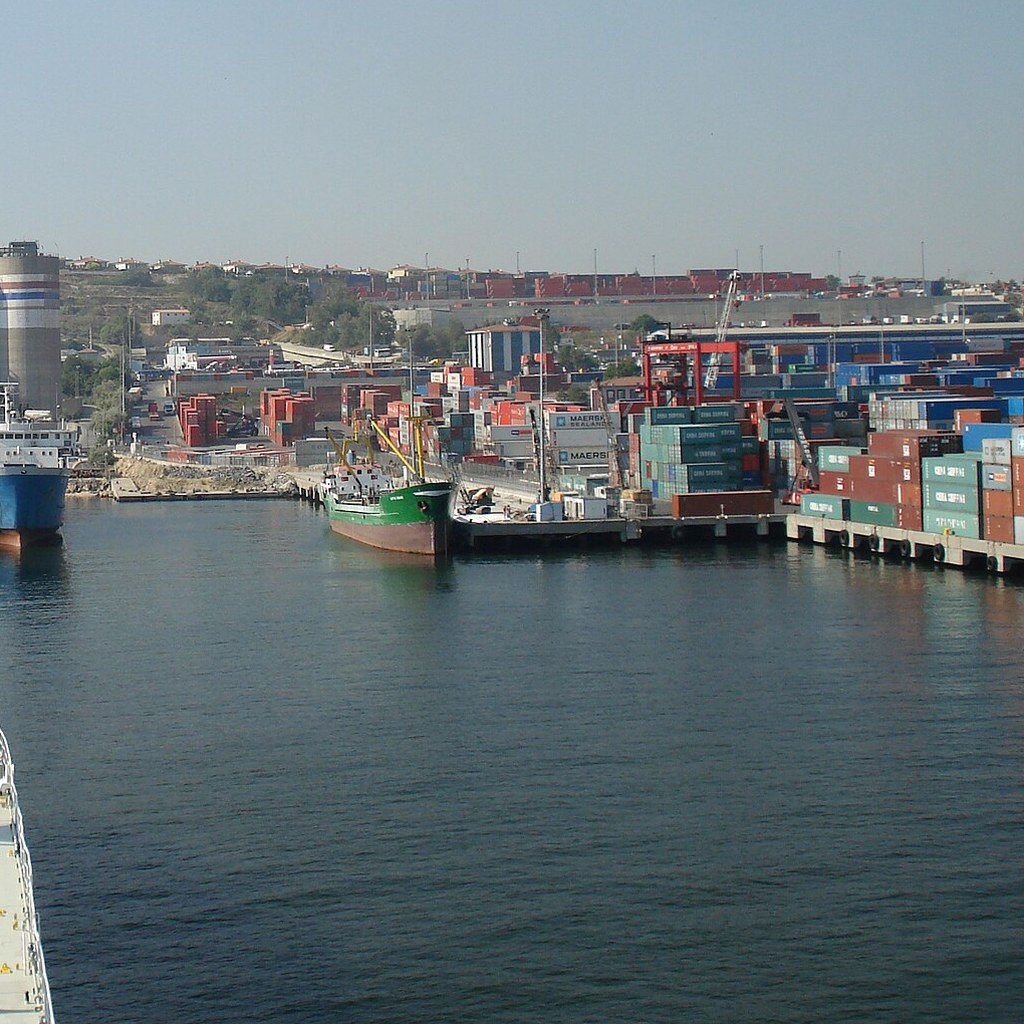
Cover image: —=XEON=— / Wikimedia Commons, CC BY 3.0, cropped
Earlier coverage: Turkey
- U.S. Sanctions Put Pressure on Zanjani's Fintech Network · July 29, 2026
- Another IPO-bound company in Turkey files for bankruptcy protection · July 28, 2026
- Turkey Keeps Key Interest Rate at 37% for the Fourth Time · July 23, 2026
- Turk Ilac Reports Default · July 20, 2026
 Security EngineerDelivery HeroIstanbul, TurkeyNew
- Trade & Campaign ManagerDelivery HeroIstanbul, TurkeyNew
 Architect - Tersane IstanbulAccorIstanbul, Turkey