Turkey's Auto Industry: Passenger Car Production Falls 20.1% in October
Turkey Column “Bosporus Briefing”
Turkey’s auto industry built 63,797 passenger cars in October, 20.1% fewer than a year ago. This is according to the production bulletin from the manufacturers’ association OSD. By contrast, the industry’s export value rose to $4.03 billion. Germany remains the largest market.
| Key Figure | Current (Oct. 2026) | Previous Year (Oct. 2025) | Source |
|---|---|---|---|
| Passenger Car Production | 63,797 units | 79,851 units | OSD |
| Light-Duty Truck Production | 44,809 units | 36,658 units | OSD |
| Total automotive exports | 4.03 billion U.S. dollars | 3.82 billion U.S. dollars | OİB |
| Automotive exports to Germany | $650 million | $628 million | OİB |
Turkey’s Auto Industry: Passenger Car Production Down 17% Since January
October is not an outlier. From January through October, 592,163 passenger cars rolled off the assembly line. In the same period last year, the figure was 717,321. Total vehicle production, excluding tractors, fell by 6% to 1,092,519 vehicles. In Hungary, however, vehicle production rose by 33% in September.
The domestic market is also shrinking. Dealers sold 916,149 vehicles through October, 15% fewer than the previous year. Passenger car sales fell by 17% to 692,916 units. Passenger cars suffered the sharpest decline in exports. Manufacturers shipped 364,639 passenger cars abroad through October, a 25% decrease. Total exports fell by 9% to 779,557 vehicles.
Ford Otosan, the joint venture between Ford and the Koç Group, remains the largest producer. The company produced 44,442 vehicles in October. That accounts for more than one-third of the total. It is followed by Oyak Renault with 33,921 vehicles and Toyota with 16,376 vehicles.
Vans and automotive parts drive export value
While unit sales are falling, export value is rising. The industry generated $35.17 billion in revenue from January through October, according to the Automotive Industry Exporters’ Association (OİB). In the same period last year, the figure was $34.02 billion, an increase of 3.4%. The automotive industry thus accounts for 14.9% of all Turkish exports. These revenues also support Turkey’s current account balance, which posted a surplus in September.
Commercial vehicles are the main driver of this balance. In October, the plants produced 22.2% more light commercial vehicles than a year ago. Since January, the increase has been 18.6%. Ford Otosan manufactures the Transit in Kocaeli, as well as the new VW Transporter. Ford Otosan’s exports rose by 18% in October to 40,377 vehicles. This is according to an analysis by the brokerage firm Deniz Yatırım.
Automotive parts remain the largest export category. In October, the industry sold parts worth $1.42 billion abroad, down from $1.47 billion a year earlier. Passenger cars accounted for US$1.28 billion, up from US$1.16 billion. The EU accounted for 73.2% of October’s exports, valued at US$2.95 billion.
What this means for German companies
Germany is the most important market for the Turkish auto industry. In October, vehicles and parts worth $650 million were shipped to Germany, up from $628 million a year earlier. Germany also tops the list of buyers for supplier parts. The customs union with the EU keeps these supply chains duty-free. German manufacturers and dealers thus source vans and components from Turkey.
However, production costs are rising. According to the Turkish Statistical Institute (TÜİK), consumer prices in October were 29.77% higher than the previous year. The Turkish Central Bank (TCMB) lowered its key interest rate on October 22 from 37% to 36%. On November 18, one euro cost around 55.3 Turkish lira, according to the TCMB reference rate. OİB CEO Kemal Yazıcı said on November 9: “Our costs, measured in euros, have more than doubled over the past four years.” According to Yazıcı, wages and other costs have kept pace with inflation, while the euro exchange rate is rising more slowly. Yazıcı is therefore calling for the lira to depreciate each month at least as much as consumer prices are rising. He links this to the EU debate on rules for “Made in Europe.”
For German buyers, this means that Turkish suppliers are under cost pressure, according to their association. This increases the risk of price adjustments in euros. Anyone sourcing parts from Turkey should review price escalation clauses and identify alternative suppliers. German suppliers to Turkish passenger car plants are feeling the decline directly in their order volumes. The commercial vehicle sector, on the other hand, is showing growth. German exporters to Turkey are facing a vehicle market that had shrunk by 15% as of October. A comparison by Eastern Economy for Russia and Germany shows how much value is retained in the country when cars are purchased. Further analyses are available on the Turkey page of Eastern Economy.
Source: Daily Sabah (EN), OSD 1, 2, OİB 1, 2, TCMB 1, 2, 3, Deniz Yatırım (all TR)
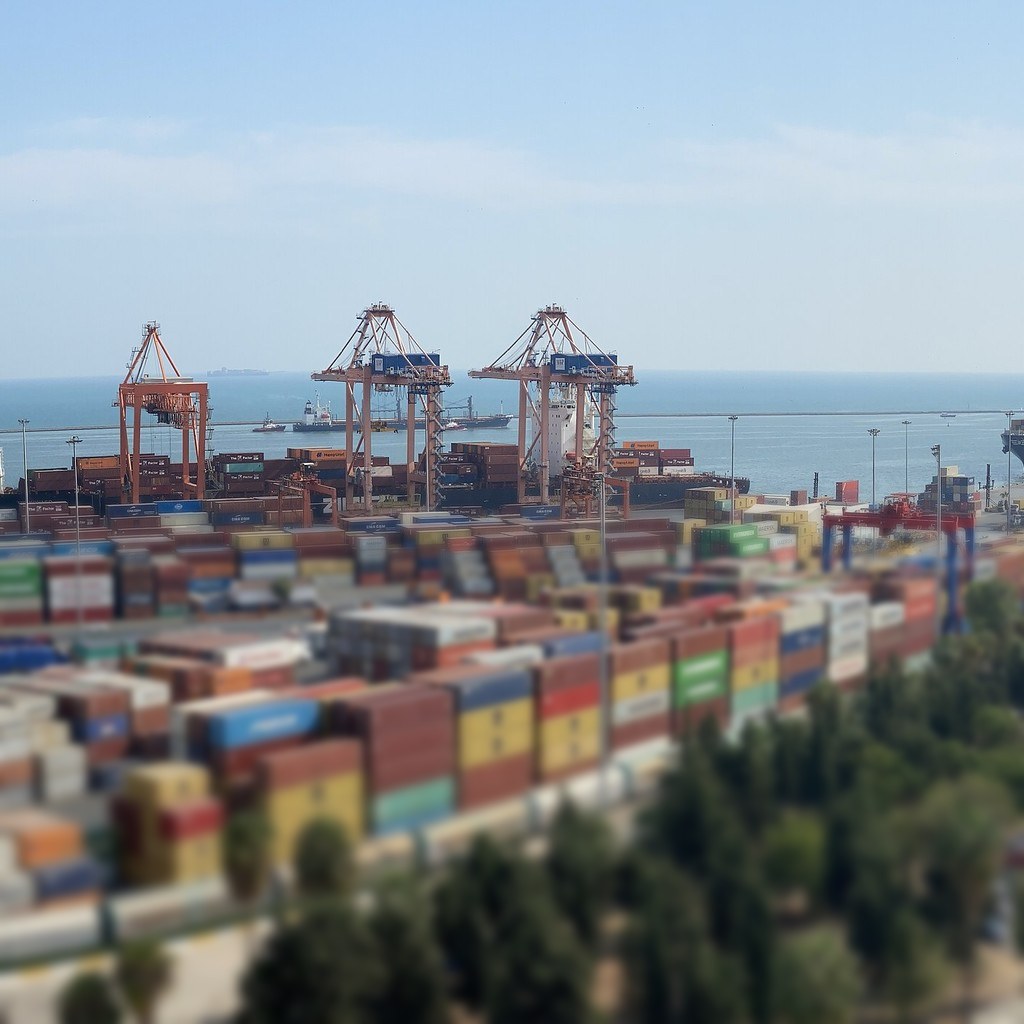
Cover image: Seyfettin Gündoğdu / Wikimedia Commons, CC BY-SA 4.0, cropped and edited

Earlier coverage: Turkey
- Turkey Keeps Key Interest Rate at 37% for the Fourth Time · July 23, 2026
- Turk Ilac Reports Default · July 20, 2026
- Vestel Engages Houlihan Lokey to Restructure Its Bonds · July 17, 2026
- Turkish IPO Market Reaches 24.6 Billion TRY in the First Half of the Year · July 7, 2026