Slovak Housing Prices Rise 10.9% in the Third Quarter: Higher Mortgage Rates Are Not Slowing the Market
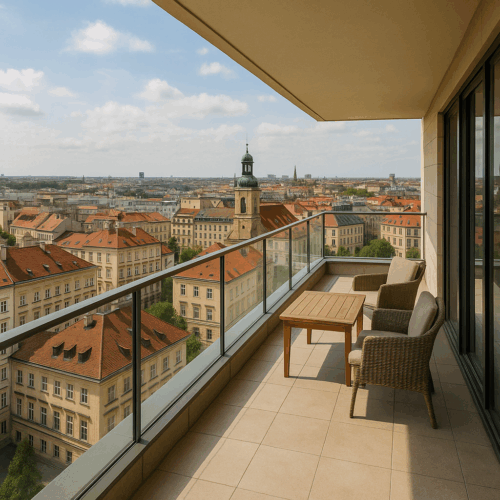
Housing prices in Slovakia rose by 10.9% year-over-year in the third quarter of 2026. This is according to a statement from the National Bank of Slovakia (NBS) dated November 3. Compared to the second quarter, the average price rose by 2.6%. It now stands at 3,120 euros per square meter, which is 78 euros more than in the previous quarter.
The data comes from the platforms United Classifieds and NARKS, which the NBS analyzes. The year-over-year growth rate has thus accelerated slightly.
Apartments, Houses, and Regions
On average, an apartment costs 3,497 euros per square meter, 1.9% more than in the previous quarter. Houses are priced at 2,202 euros per square meter, an increase of 1.8%. New construction prices rose by 1.5%. Smaller and older properties are rising the fastest. The largest apartments, on the other hand, are down 7%.
The picture varies by region. The Banská Bystrica district saw a 9.3% increase, while the Trnava district rose by 4.4%. The Bratislava metropolitan area rose by 2.7%. In the Košice district, prices fell by 0.3%. Supply remains tight: The number of new listings is 2% below the previous year’s figure.
Higher mortgage rates are not slowing the market
The interest rate for new mortgages rose from 3.8% in June to 3.9% in September. The average interest rate for residential loans with fixed-rate terms of one to five years stood at 3.73% in August. According to the NBS, lending remains at a high level. NBS analyst Roman Vrbovský writes: “The expected decline in the real estate market as a result of rising interest rates has not materialized so far.”
Prices are rising even though the economy is barely growing. On September 4, the Slovak Statistical Office reported a 0.8% year-over-year increase for the second quarter. This is the lowest figure in a year. Growth has been below 1% for six consecutive quarters. The NBS will publish a flash estimate for the third quarter on November 13.
NBS Governor Peter Kažimír warned of high inflation on November 2. He wrote: “We should act before high inflation starts to seem normal to us.” According to Kažimír, energy is nearly one-fifth more expensive than a year ago. The weaker euro against the dollar is also making imports more expensive. The European Central Bank has kept its key interest rate at 2.65% since September 16.
Implications for German Investors
German project developers and funds are finding a market in Slovakia with double-digit price growth and tight supply. The risk lies in financing: if interest rates continue to rise, demand could plummet. Exporters of building materials and building services equipment are benefiting from brisk construction activity. They should review payment terms, as a weak economy puts a strain on payment behavior.
Sources: Národná banka Slovenska, commentary dated November 3 and 2, 2026 (SK); Štatistický úrad SR via TASR, September 4, 2026 (EN)
SK, Frankfurt
Earlier coverage: Central Europe
- Czech Economy Grows 1.6% in the Third Quarter: The Slowest Growth in Two Years · November 4, 2026
- Hungary's economy grew by 1.5% in the third quarter: Inflation stands at 1.6%, and the key interest rate is 5.5% · November 3, 2026
- Poland's inflation falls to 3.5% in October: Prices drop 0.4% from the previous month · November 2, 2026
- Slovakia Projects a 4.94% Deficit for 2027: S&P Affirms A Rating; Industry Contracts by 0.2% · October 28, 2026