China and Turkmenistan at odds over gas exports
There is a gap between political rhetoric and economic reality: Turkmenistan and China are presenting conflicting figures regarding their joint gas deals. This raises questions about the true nature of their energy partnership.
In an interview with the Chinese state broadcaster CGTN at the end of March, Turkmenistan’s head of state, Gurbanguly Berdimuhamedow, emphasized the “centuries-old relations” between the two countries. At the same time, he cited specific figures: According to these, Turkmenistan exports approximately 40 billion cubic meters of natural gas to China annually. There are even plans to increase this to 65 billion cubic meters in the future.
However, this account contradicts information from Beijing. The Chinese ambassador in Ashgabat, Ji Shumin, stated a few days later that exports in 2025 are likely to amount to only around 30 billion cubic meters—with no short-term increase.
Pipeline as a Bottleneck
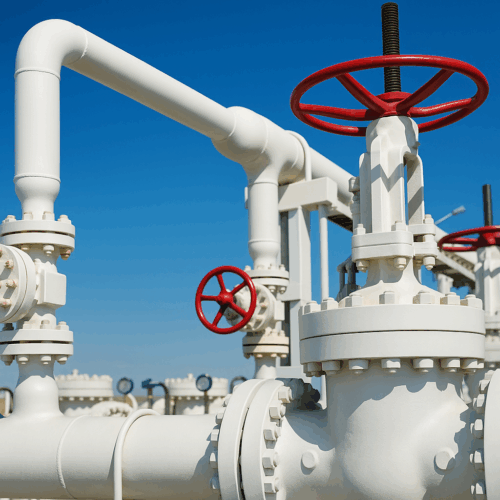
The reason for the discrepancy apparently lies in the infrastructure. An expansion of supply volumes would only be possible with the planned “Line D” pipeline. Although the project was launched back in 2014, it has been plagued by delays and disputes for years. Currently, there are no clear indications that construction work will resume anytime soon.
The existing pipelines A, B, and C do have a total capacity of around 55 billion cubic meters per year. However, statements from China suggest that even these capacities are not currently being fully utilized.
For Turkmenistan, the energy sector is of central importance: the majority of bilateral trade with China consists of gas exports. The country is also one of the few states in Central Asia with a trade surplus with the People’s Republic.
Dependence Grows – Outlook Remains Unclear
The contradictory figures underscore a fundamental problem: Turkmenistan is heavily dependent on the Chinese market, while China is strategically diversifying its energy relations.
At the same time, Beijing is intensifying its economic presence in the region. In Kazakhstan, a Chinese company is expanding tungsten production, while energy and raw materials projects are increasingly geared toward Chinese buyers. Negotiations are also underway in the oil sector regarding an expansion of transit to China.
In Kyrgyzstan, the government is seeking better access to the Chinese food market but continues to face regulatory hurdles. At the same time, economic cooperation is growing in areas such as infrastructure and disaster management.
Uzbekistan, for its part, is benefiting from a sharp rise in Chinese tourists, while Chinese companies in e-commerce continue to face regulatory challenges.
These developments show that China is continuing to expand its economic role in Central Asia—yet in the energy sector, key projects and promises are falling short of expectations.