Central Asia Struggles to Develop a Common Water Strategy
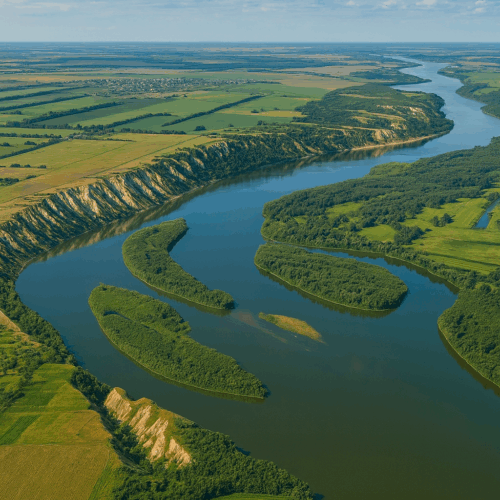
The Central Asian states are under increasing pressure to fundamentally reform their management of rapidly dwindling water resources. While there is agreement that the existing institutional framework is inadequate, there is still no consensus on how to reconcile economic development goals with limited water resources.
Last year, several countries unveiled water-intensive development programs—including plans for nuclear power plants, data centers, IT hubs, and the expansion of mining and processing industries. At the same time, the region’s population is growing rapidly. Both factors are increasing the demand for water in a region that is already facing structural water shortages.
Kazakhstan Pushes for Reforms
Against this backdrop, the idea of deeper regional cooperation is gaining importance. At a meeting of the Intergovernmental Commission for Water Coordination (ICWC) on February 23 in Dushanbe, Kazakhstan presented a reform proposal.
The plan calls for the establishment of a new institution under a Central Asian framework convention on water management. Unlike existing bodies, this institution would have enforcement powers. Kazakhstan’s Minister of Water Resources, Nurzhan Nurzhigitov, called for support for the initiative and highlighted the need for greater coordination of climate adaptation and sustainable resource management.
Upstream vs. Downstream
The ICWC meeting made it clear how difficult it remains to establish a unified approach. While alarmingly low water levels in reservoirs and rivers were discussed, concrete joint measures for the upcoming irrigation season were not agreed upon.
A key obstacle is the conflicting interests of upstream and downstream countries. As upstream countries, Kyrgyzstan and Tajikistan control the majority of water resources. Kazakhstan, Turkmenistan, and Uzbekistan, as downstream countries, consume the largest share—primarily for agriculture.
The use of water resources is closely linked to energy policy. Upstream countries rely heavily on hydropower in the winter. In the post-Soviet era, downstream countries occasionally supplied energy in exchange for regulated water releases. However, in the face of declining water levels, these informal exchange arrangements are reaching their limits.
Kyrgyzstan calls for fundamental reform
In Kyrgyzstan, too, calls for reform are growing. A commentary by the state news agency Kabar emphasized in early February that roughly half of Central Asia’s population—about 37 million people—lives in regions with acute water shortages. The water scarcity increasingly threatens economic growth.
At the same time, the commentary highlighted the persistent divide between upstream and downstream states. From Kyrgyzstan’s perspective, the interests of the upstream states have been disadvantaged since the collapse of the Soviet Union. Kyrgyzstan now participates in the ICWC only as an observer.
The government in Bishkek is calling for regional mechanisms to take the interests of all states into account equally. Otherwise, the legal framework must be revised, as many provisions are considered outdated.
Debate Over Water Prices
Kyrgyz politicians are now going even further. Some lawmakers are calling for Kyrgyzstan to charge fees for the use of its water resources in the future. References to international examples—such as water or energy compensation payments between Canada and the U.S. or between Germany and Sweden—are cited to support this argument.
Such a step, however, would provoke resistance from the recipient states, which are historically accustomed to largely free access to water.
The debate makes it clear: strategic awareness of the urgency of the water crisis is growing in Central Asia. Yet tactical agreement remains difficult to achieve for the time being.
This article was produced in cooperation with our partner bne intelliNews