Russia's Gaming Market: Leveling Up Despite Obstacles
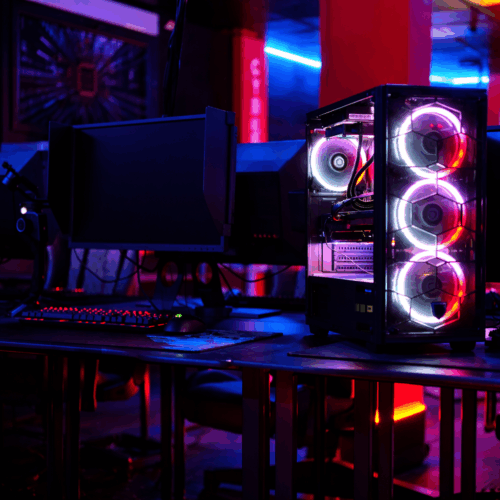
The Russian video game market is estimated to be worth around 200 billion rubles in 2025, equivalent to 2.2 billion euros. This places Russia in the middle of the pack in international comparison: The global games market reached just under 167 billion euros in 2025, with Russia accounting for about 1.5% of global revenue. The German gaming market is significantly larger than the Russian one and had revenue of around 9 billion euros in 2025, accounting for more than 5% of global revenue.
Following the slump in 2022, the Russian market gradually stabilized starting in 2023. The market volume stood at around 176 billion rubles in 2023—equivalent to 1.9 billion euros at the current exchange rate—and at approximately 187 billion rubles in 2024, or 2.07 billion euros. Further growth of 5% is expected for 2026.
Restart in 2022, Expansion in 2025
The year 2022 marked a turning point for the Russian gaming industry. International providers and platforms curtailed their activities, and international payment transactions became more complicated. As a result, the focus shifted to local infrastructure. Platforms such as VK Play and RuStore gained prominence, and major companies invested in their own distribution models.
A phase of reorganization began in 2023. The market returned to moderate growth and reached pre-crisis levels by 2024.
In 2025, the most-played games in Russia are primarily established online titles and long-running service games. These include World of Tanks, Counter-Strike 2, Dota 2, Minecraft, and EA Sports FC 2026 in the console and PC segment. While mobile games have the widest reach in terms of user numbers, PC and console titles dominate in terms of revenue.
Payments as the Final Boss: Buying Games Despite Sanctions
Since 2022, key international payment channels for Russian users in the gaming sector have been restricted or are only accessible via workarounds, as platforms such as Steam, Google Play, and the App Store have ceased direct cooperation with Russian banks. Since then, game purchases have increasingly been made through third-party providers, foreign cards, or alternative payment service providers, which makes the process more complex and, in some cases, more expensive.
According to data from the payment service provider YuKassa, the number of gaming transactions in Russia rose by 19% in 2025 compared to the previous year. At the same time, the average payment amount fell by nine percent to 508 rubles, or about 5.50 euros.
The number of transactions for money transfers to the world’s leading gaming site, Steam, also doubled by the end of 2025. The average amount, however, fell by 4% to 782 rubles, equivalent to 8.50 euros.
A survey of more than 2,000 gamers revealed that 79% of Gen Zers, born between 1997 and 2010, 61% of Millennials, born between 1981 and 1996, and 65% of Generation X, born between 1965 and 1980, buy games through official stores. Generation Alpha, born in 2010 or later, shows the highest daily gaming activity: 75% report playing daily.
The State Gets Involved
The Russian government has significantly expanded its role in the gaming sector since 2022. The “Institute for the Development of the Internet” plans to invest approximately 3.4 billion rubles—about 40 million euros—in gaming projects between 2026 and 2027.
Since 2022, a total of about five billion rubles, 55 million euros, has been allocated to nearly 50 projects. In an industry survey of more than 200 development studios, 47.2% cited tax breaks and 45.1% cited development grants as the most important forms of funding.
The media regulatory authority Roskomnadzor is the regulator of digital platforms. In 2024, the communication service Discord, popular among gamers, was blocked, followed by the official ban of Roblox at the end of 2025. Roblox is an international online platform where users can create their own games and play others’ projects. Before the ban, Russia was one of the larger markets in Europe, with estimates suggesting several million active users, primarily among children and young people. The block by Roskomnadzor at the end of 2025 meant that the platform is officially no longer accessible.
Russia’s Answer to PlayStation
In recent years, the Russian game studio with the highest revenue was Lesta Games, which published the game World of Tanks in Russia, generating approximately 24.8 billion rubles in revenue in 2024, equivalent to 300 million euros. In April 2025, the Tagansky District Court in Moscow ordered the seizure of Lesta Games’ assets at the request of the Russian Prosecutor General’s Office.
Other major development studios include Astrum Entertainment with 100 million euros in revenue, Krista Games with 40 million, and Innova with 32 million euros. In total, there are several hundred development studios in Russia, predominantly small and medium-sized enterprises.
In the wake of Western export restrictions on game consoles, discussions about developing a Russian-made game console have been underway since 2024. The electronics manufacturer Fplus has unveiled several prototypes of a portable console, but mass production has not yet begun.
A survey by the state-run market research institute VZIOM shows that 82% of Russian gamers primarily play on PCs, 63% on smartphones, 24% on PlayStation consoles, and 9% on Xbox systems. Only 27% of respondents had heard of the initiative for a Russian console.
This article first appeared in the exclusive newsletter of the German-Russian Chamber of Foreign Trade