Mandarins for two dollars
The War in Iran and Its Consequences for Central Asia
Author: Thorsten Gutmann

Shemshat Kurbanova, a 62-year-old retiree from Ashgabat, used to always buy her fruit from Iran because it was fresh and inexpensive. But that has changed since February 28, 2026, when the first American and Israeli bombs fell on Iran. “Everything has doubled in price,” she tells the AFP news agency. A mandarin now costs $1.90, an apple more than $2. Just a few kilometers beyond the Kopet Dag Mountains lies Iran—a conflict unfolding right on the doorstep of the people of Turkmenistan.
Turkmenistan is most directly affected by the war: The country shares a long border with Iran, depends on its food supplies, and is closely tied to Tehran through energy swap deals. But the shockwaves extend as far as Tashkent, Almaty, and Dushanbe. For Central Asia, the war in Iran is thus not a distant conflict, but an economic shock.
Turkmenistan: Right on the Front Line
The economic ties are close: Tehran pays for Turkmen gas with food, and there are also joint electricity projects and brisk cross-border trade. When Iran imposed a complete export ban on agricultural products on March 3, 2026, it hit Turkmenistan immediately. Byashim Ovezov, a merchant from Ashgabat, warns: “The flow of goods has come to a standstill. If the war continues, people like me will lose their livelihoods.”
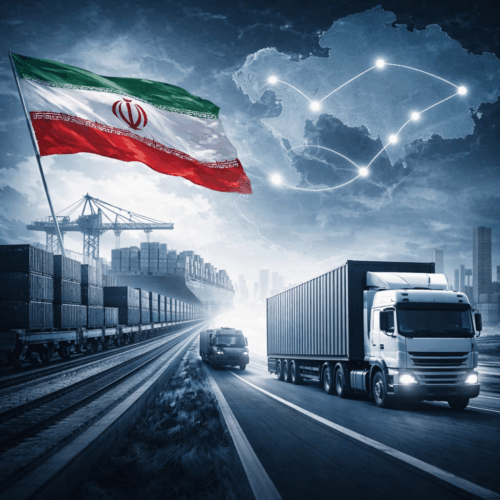
Kyrgyz economist Iskender Sharsheyev emphasizes the structural importance of the neighboring country. Iran has long served as a window to the south—a corridor to the Persian Gulf and to the markets of India and Europe. That route is now paralyzed. Alternatives via China or Turkey are more expensive and logistically more complex. At the moment, there is no quick replacement for Iranian transit, according to Sharsheyev.
A diplomatic tightrope walk
Shortly before hostilities began, the presidents of Kazakhstan and Uzbekistan were still participating in multilateral talks as part of the “Board of Peace” initiated by Trump. Catherine Putz wrote dryly in The Diplomat: It is awkward to have publicly called Trump the “President of Peace” while he is plunging the Middle East into a potentially catastrophic conflict. This quote applies less to the Central Asian capitals than to the speed with which the international situation has changed.
The region’s foreign ministries responded with restraint: there were calls for de-escalation, reaffirmations of the UN Charter, and a commitment to strict neutrality. The Kazakh Ministry of Foreign Affairs expressed its sympathy to the Iranian people in light of the civilian casualties. This form of communication underscores Central Asia’s commitment to maintaining stable relations with all actors.
Uzbekistan: The Search for New Paths
Although direct trade with Iran accounts for only a small portion of Uzbekistan’s GDP, logistics remain a vulnerable point. Up to 60 percent of goods imported from Turkey and Europe reach Uzbekistan via Iranian ports such as Bandar Abbas. Since the southern corridor is now blocked, President Mirziyoyev has ordered a review of alternatives. A potential offset could be the rising price of gold, as Uzbekistan exported $10 billion worth of precious metals in 2025. This could partially offset the higher logistics costs.
Kazakhstan: Roses, Grain, and Strategic Resilience
The war was even felt on Kazakhstan’s Women’s Day: as Arab airlines suspended operations, prices for imported roses rose by 20 percent. But the strategic risks weigh more heavily. In addition to rising insurance premiums, the grain market is particularly affected. Kazakhstan exports up to 1.2 million tons of grain to Iran annually.
In the short term, Kazakhstan benefits from high prices as an oil exporter. However, economic strategist Alex Matrsson sees more to this than mere arithmetic: Under President Tokayev, the country has invested in Trans-Caspian trade routes and partnerships with Gulf states—not as a reaction to the crisis, but to be prepared for such moments. In a world where maritime chokepoints like the Strait of Hormuz can be closed overnight, land-based corridors through Central Asia are gaining importance.
Historian Peter Frankopan describes Tokayev as a shrewd strategist who carefully weighs competing interests. Central Asia has proven in recent years that it can adapt quickly to new realities. Meanwhile, Shemshat Kurbanova, a retiree from Ashgabat, simply hopes that the mandarins at her market stall will soon become affordable again.
Sources: AFP/France24 (Ashgabat, March 10, 2026); The Diplomat/Catherine Putz (March 3, 2026); Gazeta.uz (Kholboev/Eskandari, March 3–5, 2026); Inbusiness.kz (March 8, 2026); LSM.kz (Abdrakhmanov); DKNews/Alex Matrsson (March 2, 2026); Times of Central Asia/Peter Frankopan (March 10, 2026); SpecialEurasia (March 8, 2026).