China Signs Multi-Billion-Dollar Deal with Turkmenistan
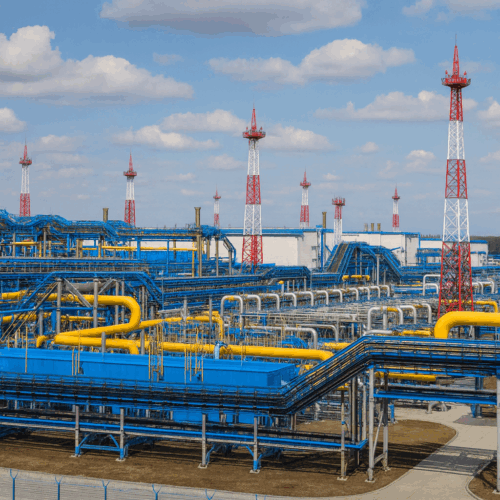
Turkmenistan has signed a $4.6 billion contract with a subsidiary of the Chinese state-owned company CNPC to develop the fourth phase of the massive Galkynysh gas field. What is striking, however, is that Beijing is not participating in the financing. Ashgabat is bearing the entire cost itself. This suggests that while China sees economic value in the project, it apparently does not wish to finance it as a strategic priority.
Construction is scheduled to begin in 2026. The project is expected to take just over four years to complete. In addition to the Galkynysh agreement, Turkmen and Chinese companies are also exploring opportunities for cooperation in other areas, including finance, agriculture, construction, transportation, and communications, according to the official Turkmen news agency TDH.
The TDH report did not provide any details. However, another official Turkmen source indicates that the Chinese Shaanxi Yulin Energy Group has proposed establishing a magnesium alloy production facility in Turkmenistan. According to the report, the Puyang Shengyuan Petrochemical Group plans to build a plant for the production of polycarbonate, which is used in electronics and medical technology, among other applications.
Chinese companies are also said to have submitted a proposal to the Turkmen authorities for the construction of a high-speed rail system.
Central Asia Expands Corridors
Cooperation with China is also deepening at the regional level. Railway representatives and logistics companies from Kazakhstan, China, Turkey, and European countries have agreed on new operating conditions for the Middle Corridor. The goal is to shorten transit times across the Caspian Sea.
According to InBusiness.kz, this also includes the elimination of paper-based freight tracking. Plans for this year call for 600 container trains from China to pass through Kazakhstan.
Central Asian countries and China are also discussing the establishment of an interregional investment and trade council as well as a five-year plan for sustainable development. High-ranking diplomats from Central Asia and China recently met in Xi’an to discuss these matters.
Kazakhstan remains a key hub
In Kazakhstan, construction has begun on a $587 million investment project to expand the Khorgos International Center for Boundary Cooperation on the border with China. Khorgos has long been considered an important logistics hub, but it has also faced criticism due to allegations of corruption, smuggling, and inefficiency.
In the first quarter of 2026, approximately 85,000 vehicles were exported via the Khorgos dry port. This represents a 13.1 percent increase compared to the same period last year. Not all vehicles remain in Kazakhstan, but the country is increasingly becoming a significant market for Chinese automakers. By 2026, Chinese brands are expected to achieve a 42 percent market share in Kazakhstan.
The Chinese automaker Chery signed distribution agreements with two Kazakh companies: with Orbis Auto for Lepas models and with Astana Motors for Omoda and Jaecoo. As early as the beginning of April, Chery had also signed a contract for Lepas models in Uzbekistan.
China’s influence is also growing in agriculture. In Kyzylorda, a key agricultural region of Kazakhstan, farmers are increasingly switching from rice to corn due to strong demand from China. Similar shifts are also being observed in other parts of the country.
The national grain trader Food Contract Corp is also negotiating with Shandong Hi-Speed regarding increased grain shipments to China. Chinese investors are also planning a high-tech center for the production of virus-free seed potatoes in Kazakhstan.
Energy, Security, and Education
In Kyrgyzstan, the Chinese company Sinomach has begun construction on a $260 million renewable energy project in the Jalal-Abad region. Kyrgyzstan is also negotiating with China Energy Engineering Investment on renewable energy projects worth $1 billion, as well as with Power China on additional energy and infrastructure projects.
Representatives from Kyrgyzstan and China’s Shandong Province also agreed to establish 250 production lines to strengthen small and medium-sized enterprises. However, financial details and a timeline were not disclosed.
In Tajikistan, representatives of the Ministry of the Interior of the Gorno-Badakhshan Autonomous Region met with security officials from the Chinese district of Kashgar to discuss cooperation. China appears to be seeking to expand its security presence in the region.
At the same time, Southwest University in China and the Tajik Institute of Botany, Plant Physiology, and Genetics signed an agreement to breed new agricultural crops.
In Uzbekistan, meanwhile, Tashkent State University of Transport and Shenzhen Polytechnic agreed to offer joint bachelor’s degree programs in automotive engineering and aerospace engineering, including unmanned aerial vehicles.