Central Asia is adapting to the Aral Sea disaster
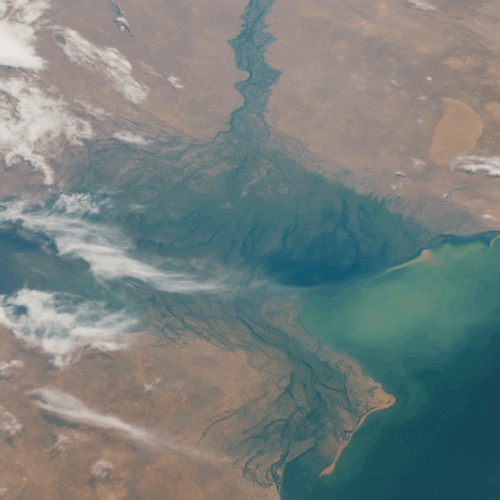
The Aral Sea, once one of the world’s largest inland seas, can no longer be restored. The Central Asian states are therefore increasingly focusing on mitigating the consequences of the environmental disaster and improving the living conditions of the millions of people affected. This was stated by a high-ranking regional official.
“Unfortunately, the Aral Sea can no longer be saved,” said Askhat Orazbay, Chairman of the Executive Committee of the International Fund for Saving the Aral Sea (IFAS), on the sidelines of the 2026 Regional Ecology Summit in Astana in April. “When it was founded, there were efforts to restore and save it. We are now continuing our work, but the reality has changed.”
Instead of full restoration, the focus is now on adaptation and damage control. Governments in the region are working on new initiatives, including a roadmap for 2026–2029 developed in collaboration with the World Health Organization. The goal is to improve the health and living conditions of people throughout the Aral Sea basin.
IFAS to ensure regional cooperation
This shift also illustrates how the role of IFAS has changed. The fund was established in 1992 following the collapse of the Soviet Union. At that time, the newly independent Central Asian states faced the challenge of managing shared water resources without central control.
“The presidents of five Central Asian countries decided to establish this international body to address the most pressing issues—environmental issues and water management issues,” said Orazbay.
During the Soviet era, the distribution of water from the region’s major rivers, including the Amu Darya and Syr Darya, was centrally regulated from Moscow. “All these issues were decided by the central government in Moscow, particularly water distribution,” he said. “Each Central Asian country was allocated specific amounts of water—without discussion; these quotas had to be implemented.”
After independence, this system collapsed. “Chaos reigned because each of these countries became independent,” said Orazbay.
The situation was exacerbated by the geographical differences between the countries. States located on the upper reaches of the rivers have different options than those on the lower reaches. As a result, water quickly became a sensitive regional issue.
“Water is the most sensitive and important issue in Central Asia,” said Orazbay. “Today, it is even more important than before due to water scarcity, climate change, population growth, and economic development.”
The IFAS was established as a cooperation mechanism. One of its main tasks is to distribute the available water resources in Central Asia as equitably as possible, said Orazbay.
Focus on the consequences of the environmental disaster
At the same time, the fund is intended to mitigate the long-term consequences of the collapse of the Aral Sea. This process had already begun during the Soviet era, when large volumes of water from the tributaries were diverted for irrigation projects. The consequences were dramatic: the lake shrank, ecosystems were destroyed, and the livelihoods of many people changed fundamentally.
“The disaster in the Aral Sea region has already occurred. That is why we are now facing further consequences—in the environment, agriculture, healthcare, and society,” said Orazbay. “For this reason, the heads of state decided to establish IFAS to mitigate the negative consequences of the Aral Sea disaster.”
More than three decades later, Orazbay continues to view the organization as a key stabilizing factor. “One of the most significant achievements is that this organization and the coordination mechanism among the five countries have helped prevent potential clashes and conflicts over water issues,” he said.
At the same time, the fund must adapt to new realities. “The situation back then was different from today,” said Orazbay. “Our task is to adapt to the current situation and the new conditions on the ground.”
However, the organization’s structure has hardly changed since its founding. “Our building still has the same shape today as it did when it was built 34 years ago,” he said.
The regional heads of state have therefore ordered reforms. “To take the new circumstances into account, the presidents have decided on changes, improvements, and reforms. That is exactly what we are implementing now,” said Orazbay. The legal basis for the organization’s work should also be improved.
Even the organization’s name could change. The current name no longer fully reflects the actual work being done, Orazbay said. Some countries have proposed alternatives such as an “Organization for Cooperation in the Aral Basin.”
While the entire Aral Sea can no longer be restored, Kazakhstan continues to work on stabilizing the northern part, the Small Aral Sea. There, targeted measures could improve water quality and enhance biodiversity.
“This will also affect the chemical composition—less salt, more water,” said Orazbay. “That means biodiversity will also improve, and there could be more fish.”
For the Aral Sea as a whole, however, the outlook remains sobering. “Overall, unfortunately, it is not positive,” he said.
In the future, IFAS plans to focus primarily on two areas: water management and environmental protection. Additionally, a third focus area related to hydropower is being considered.
In light of climate change and the growing pressure on scarce water resources, regional cooperation remains indispensable, said Orazbay. “We need a mechanism to distribute this water fairly. That is just as important today as it was 30 years ago.”