$600 million from its own coffers: Turkmenistan lures lenders with early TAPI gas
Central Asia Column “Steppe Ahead”
124 of 153 kilometers have been welded: Gas from the TAPI pipeline is expected to reach the Afghan city of Herat for the first time in early 2027. So far, Turkmenistan has been funding this construction phase—costing approximately $600 million—on its own. According to the Reuters news agency, Ashgabat is counting on early deliveries to attract lenders for the $10 billion project.
The TAPI pipeline is 22 kilometers from Herat
The section from Serhetabat on the Turkmen border to Herat is 153 kilometers long. By the end of August, 116 kilometers had been laid; by the end of October, Ashgabat reported 124 kilometers. This corresponds to just over 80% of the route; the pipeline corridor has been prepared for 150.7 kilometers. Hydrostatic tests are being conducted in sections. Satellite images from the U.S. international broadcaster RFE/RL dated November 7 show the pipeline about 22 kilometers from Herat’s western industrial zone. Turkmenistan remains committed to its goal of completing the pipeline by the end of the year. Construction has been underway since 2024, using pipes with a diameter of 1.42 meters. According to RFE/RL, the work on the route is being carried out almost exclusively by Turkmen engineers using Turkmen equipment, while Afghans provide security at the construction site. Unexploded ordnance from the war years has temporarily slowed down the work. This column reported on the construction progress ahead of the OGT 2026 Gas Forum in October.
In Herat, the gas meets a genuine need. Gas prices in the city have recently risen sharply, compounded by power shortages. The provincial governor’s office expects TAPI to bring economic growth, jobs, and new infrastructure. Afghanistan is initially expected to purchase 500 million cubic meters per year. The Afghan state-owned gas company signed a preliminary purchase agreement in August; the agreement does not specify a price. When fully operational, the 1,800-kilometer pipeline is expected to transport 33 billion cubic meters per year from Turkmenistan through Afghanistan to Pakistan and India. About 5% of this volume is reserved for Afghanistan, with Pakistan and India each receiving half of the remainder.
Ashgabat is funding the project on its own and is seeking lenders
So far, Turkmenistan has been financing the construction out of its own coffers. Afghan media estimate the cost of the Herat section at around 600 million U.S. dollars. Muhammetmyrat Amanov, head of the state-owned TAPI pipeline company, explained the strategy to Reuters: Early deliveries are intended to “create early sources of revenue and strengthen lenders’ confidence.” The Asian Development Bank and the Islamic Development Bank are considered potential lenders. Neither has made any commitments so far. According to the Asian Development Bank, any decision regarding financing or technical assistance depends on the circumstances and a due diligence review.
So far, there is a complete lack of funding for the extension to Kandahar. According to Eurasianet, a portal specializing in the region, Turkmengaz Deputy Head Myrat Archaev cites the continuation of construction as a priority for 2027. However, there is no budget or concrete construction targets. The incentive for Kabul is significant: if the pipeline is extended to Pakistan, Afghanistan stands to earn transit fees of several hundred million U.S. dollars per year. Kabul has therefore already raised the possibility of Russian participation in the continuation of construction. Energy analyst John M. Roberts of the Atlantic Council, on the other hand, sees China as the key to financing the next phases. The project dates back to the 1990s and was still considered stalled as recently as 2024 because interest in Islamabad and Delhi had waned.
Market Exists, but Price and Supply Base Remain Uncertain
The market at the end of the route is large. According to Reuters, Pakistan and India together import 45 to 50 billion cubic meters of gas per year, almost exclusively as liquefied natural gas (LNG) shipped by sea. A pipeline could deliver gas more cheaply, especially since the conflict between the U.S. and Iran has recently disrupted Gulf supply chains and reignited interest in Islamabad. However, no gas price has been agreed upon with any buyer. Pakistan’s ambassador to Turkmenistan, Faryal Leghari, also acknowledges that the conflict between the Taliban and Pakistan is disrupting cross-border trade. At the same time, according to Reuters, Islamabad has expressed interest in a supplementary pipeline to the ports of Gwadar and Karachi. India’s Ministry of External Affairs has not commented on the project recently.
The production base also remains uncertain. Turkmenistan’s gas production fell to 72.48 billion cubic meters in 2025, marking the fourth consecutive decline. China remains the main customer: Since its launch in 2009, the pipeline has delivered approximately 460 billion cubic meters to China, according to the Turkmen Ministry of Oil and Gas. The supply contract calls for approximately 40 billion cubic meters per year, and both sides are negotiating an expansion to 65 billion cubic meters. TAPI would be the first major export route to reduce this dependence. Whether it comes to fruition will not be decided on the construction site, but rather by financing and price.
Source: Reuters, Eurasianet, RFE/RL, Turkmenistan’s Ministry of Oil and Gas (all in English)
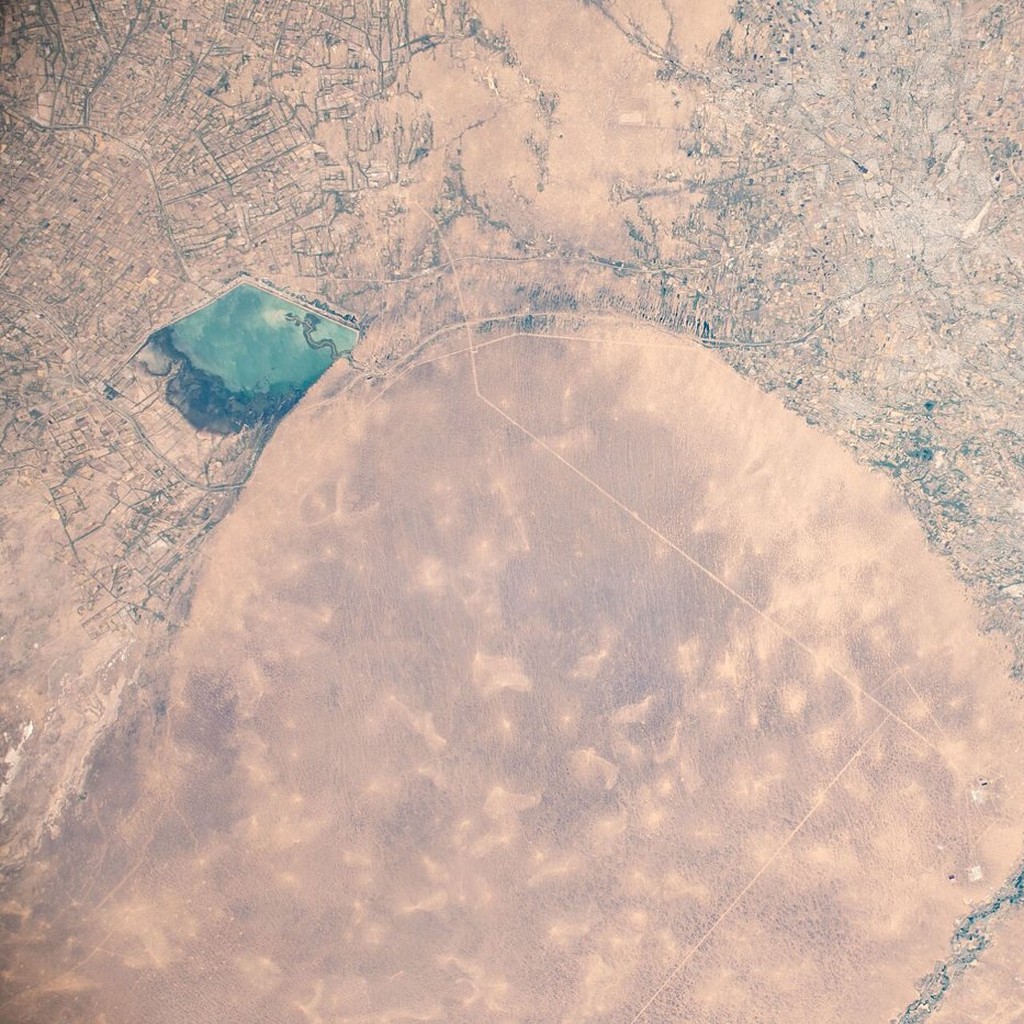
Cover image: NASA / Wikimedia Commons, Public domain, cropped
Earlier coverage: Central Asia
- Kazakhstan: Exports rise by 18.1%, surplus of 20.1 billion · November 20, 2026
- Kyrgyzstan: Economic Growth at 10.5% Through October · November 19, 2026
- Uzbekistan: $65 billion in investments by 2027 · November 18, 2026
- Kazakhstan: Key interest rate at 15.75%; IMF warns of overheating · November 16, 2026