Where Russians are vacationing this spring
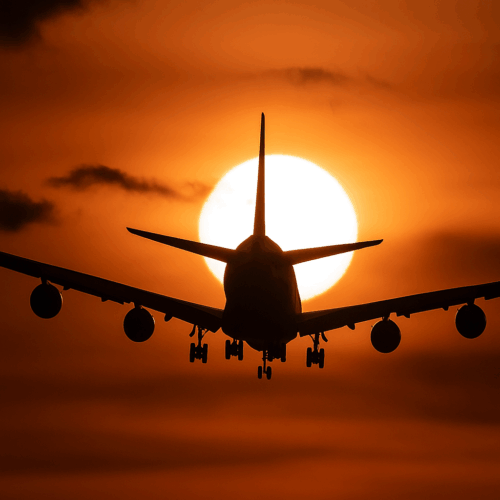
The war in Iran has thrown the international tourism industry into disarray. Due to airspace restrictions in the Middle East, thousands of flights were canceled worldwide in March. The luxury hubs and travel hubs of Dubai and Abu Dhabi were temporarily shut down entirely for security reasons. Against this backdrop, Russian tourists are rethinking their plans this spring—opting for tried-and-true vacation destinations abroad as well as travel destinations in the post-Soviet space.
Holiday alternatives found quickly
With an eye toward the May holidays in Russia, which this year fall on May 1–3 and May 9–11, travel providers are highlighting Turkey, Egypt, Vietnam, Thailand, and China. Turkey currently offers plenty of room for Russian vacationers. According to the Turkish Tour Operators Association, the number of tourists from Europe has dropped by 20–25%. Russians can currently book a one-week all-inclusive stay at a five-star hotel in the popular resort of Antalya for 120,000 to 130,000 rubles, equivalent to 1,350 to 1,465 euros.
According to the travel agency Russkij Express, demand for trips to Vietnam has tripled. The country is increasingly competing with Thailand for vacationers due to a more favorable price-performance ratio, the travel agency says. A package tour to Vietnam with a five-star hotel starts at 175,000 rubles (1,970 euros), compared to 220,000 rubles (2,500 euros) in the Thai tourist region of Phuket under the same conditions.
Popular vacation destinations welcomed more Russian tourists in March. According to the travel provider Sletat.ru, more than 26% of bookings from March 1 to 11 were for Turkey, followed by Egypt (24%), Thailand (12%), and China (10.4%). China, in particular, saw a massive 93% surge in demand compared to the end of February. Russian vacationers are currently paying 215,000 rubles (2,400 euros) for a week in the Chinese island province of Hainan with a five-star hotel.
Interest in Neighboring Countries
Russian travelers are showing increasing interest in the post-Soviet region. During the May holidays, for example, many tourists are choosing the Belarusian capital Minsk or Tashkent and Samarkand in Uzbekistan, which captivate visitors with their fascinating architecture. In early March alone, Russians booked 66% more trips to Georgia than in the same period last year. Uzbekistan (+63%), Armenia (+45%), and Kazakhstan (+13%) also saw increases.
Minsk, in neighboring Belarus, in particular, attracts Russian vacationers with its favorable travel conditions. For one thing, Russian tourists can enter the country without a visa; for another, travel costs are low. For example, a bus ticket from the Russian border town of Smolensk to Minsk costs around 2,300 rubles—equivalent to 25 euros—and the trip takes just over four hours. Russian tourists pay at least 5,100 rubles—equivalent to 57 euros—for a flight ticket from Moscow to Minsk.
Popular Destinations in Russia
The number of May bookings within Russia has declined by 15% compared to the same period last year, according to figures from the Russian Association of Tour Operators (ATOR). According to the travel provider OneTwoTrip, approximately 15% of all bookings were for Kazan, followed by St. Petersburg (14%), Moscow (11.4%), Nizhny Novgorod (4.5%), and Kaliningrad (3%). Overall, the average trip duration has decreased from 2.6 days to 2.3 days compared to early May of last year. An overnight stay costs an average of 10,400 rubles, or 115 euros.
For vacation rentals in Russia, independent travelers pay an average of 5,400 rubles (60 euros) per night over the May holidays, an 8% increase from the previous year. Renting a vacation home during this period costs an average of 13,200 rubles (145 euros, +9%). The leading regions in this segment are Moscow, Leningrad, Karelia (located on the border with Finland), and the Republic of Tatarstan.
Tourists Stay Away from the Emirates
Due to the conflict in the Middle East, many beaches and hotels in the United Arab Emirates remain empty this season. Russia’s Ministry of Economic Development estimates the losses to the Russian tourism industry due to the war with Iran at 7 billion rubles, or 77.7 million euros. The financial damage to Arab countries in the Middle East is far greater: A study by the United Nations Development Programme (UNDP) estimates losses to gross domestic product of $120 to $194 billion. The World Travel & Tourism Council (WTTC) stated that the region is losing approximately $600 million in revenue daily due to the slump in travel activity.
Kerosene Prices and New Flight Routes
The Russian booking service Level.Travel has observed price increases of 10–15% for package tours. This is linked to two factors driving up the cost of airline tickets: rising kerosene costs for airlines and changing flight routes. According to the German business newspaper Handelsblatt, the price of jet fuel has risen disproportionately. At the end of March, a gallon (about 3.8 liters) cost more than four U.S. dollars. At the end of 2025, it was still around two dollars.
Russian vacationers are currently switching to alternative routes. For some popular travel routes, the proportion of connecting flights is 40–60%, explains Dmitri Gorin, vice president of the Russian Tourism Industry Association. Before the outbreak of the war in Iran, many connections were made via Middle Eastern countries by airlines such as Air Arabia, Flydubai, Emirates, Qatar Airways, and Etihad. This development is primarily affecting tourist numbers in distant destinations like Indonesia, the Maldives, and Sri Lanka. According to experts, Russian tourists will increasingly use Turkey, Serbia, and Georgia as hubs. According to the travel provider OneTwoTrip, Russians are now choosing China more often for layovers, and India could also become a more important hub in the future.
The day's most important Russian economic stories. Free, in your inbox three times a week.
Mon, Wed, Fri. Double opt-in, no tracking, unsubscribe anytime. By subscribing you consent to the processing of your email address as described in our Privacy Policy.