What Really Counts in Caucasus Logistics: An Interview with Noytech's Perry Neumann

Perry Neumann on corridors, bottlenecks and the reality behind the grand infrastructure visions.
Anyone who travelled the Caucasus ten years ago sees a different region today. Which developments have shaped that change most?
The biggest change is the region's geopolitical significance. The Caucasus used to be a periphery; today it is a transit corridor between Europe, China, Central Asia and the Middle East. Massive investment in ports, roads, rail and warehousing has transformed the region. At the same time, sanctions, new trade flows and the Middle Corridor have produced sharply rising transport volumes. Georgia and Azerbaijan in particular have developed dynamically. Yet much remains complex: border procedures, political risks and infrastructure standards still differ markedly from western Europe.
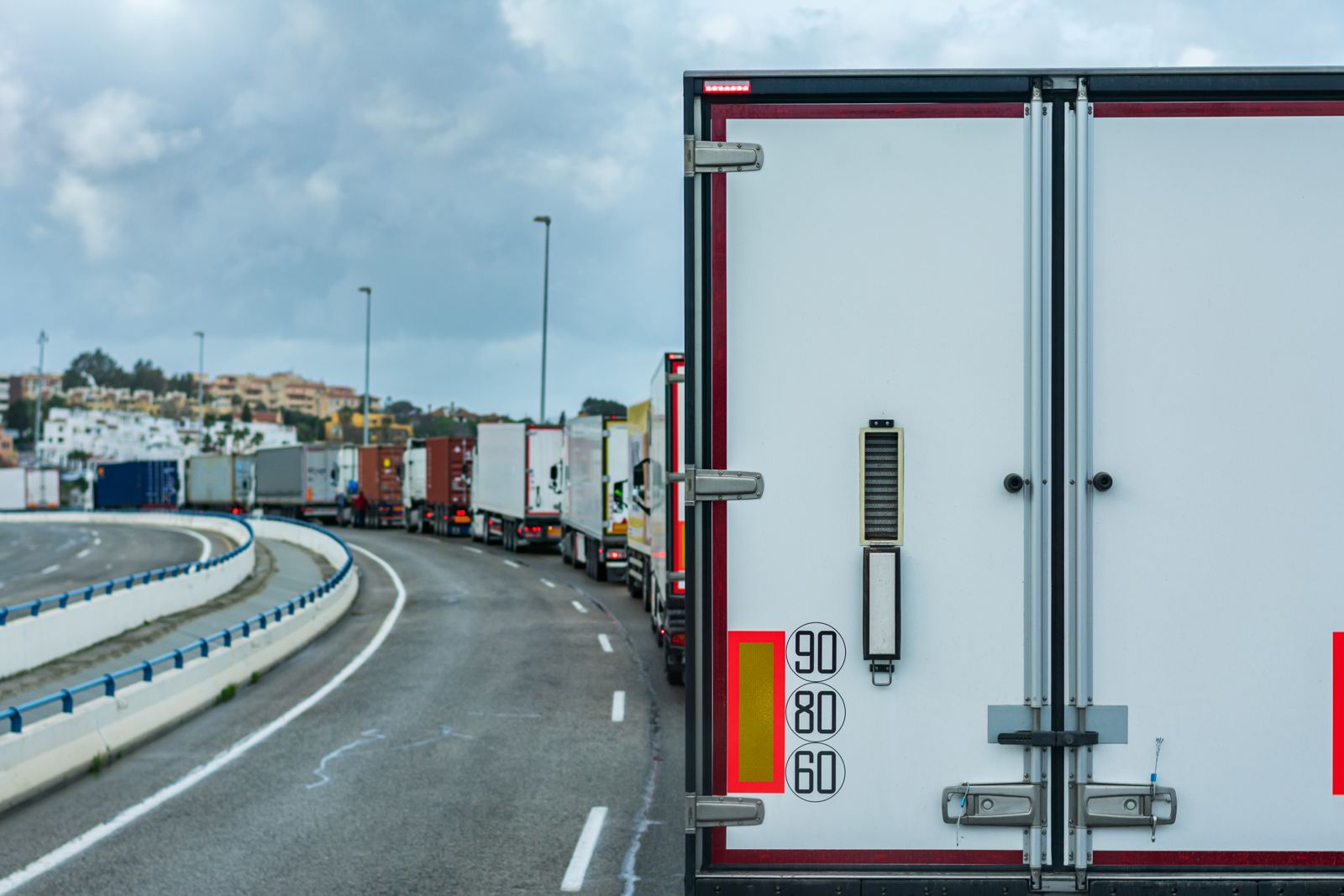
What separates everyday logistics in the Caucasus from the European standard, and which peculiarities does one need to understand to operate successfully?
Logistics in the Caucasus runs less on processes and more on networks, experience and flexibility. European standards exist on paper, but border regimes, customs, infrastructure and permits can change daily. Those who succeed take quick decisions and understand local mentalities. Personal relationships play a far greater role than in Europe. At the same time, improvisation and crisis management are essential. Anyone who works purely by the German process rulebook will fail. The Caucasus demands speed, pragmatism and a high degree of resilience.
In the South Caucasus, three countries are competing for the status of the region's logistics hub. Which is furthest ahead today — and which has the greatest potential?
Azerbaijan is furthest ahead today. The country is investing massively in ports, rail links and the Middle Corridor. Baku is steadily developing into the regional logistics hub. Georgia remains strategically vital thanks to its Black Sea ports. In the long run, however, I see the greatest potential in the regional integration of all three countries. Should political relations become stable, the entire South Caucasus could benefit enormously. Entirely new transit axes would then emerge between Europe, Central Asia and the Middle East.
Noytech is one of the few German-led logistics players with a commitment in the Caucasus. Which markets are in focus, what volumes are you moving, and where does the strategic emphasis lie in the coming years?
Noytech is present today in several CIS and Central Asian markets, including Azerbaijan, Kazakhstan and Uzbekistan. Our focus is on integrated supply-chain solutions along the new trade routes. We move containers, project cargo, automotive, retail and industrial volumes. Strategically, we see great potential in the Middle Corridor and in the connections between Russia, Central Asia, China and the Gulf. Our aim is not classical freight forwarding alone, but the construction of a fully integrated logistics ecosystem.

Georgia's deep-sea port of Anaklia has been touted for years as the key project for the Middle Corridor. The planned investment is $2.5 billion. Yet construction keeps being delayed. Is it a realistic vision, or a white elephant?
Anaklia makes absolute strategic sense. In the long term, the Middle Corridor needs high-capacity deep-sea ports on the Black Sea. At the same time, the risks are enormous: political instability, financing, geopolitical interests and competition from other ports. That is why I remain sceptical about the project. I still believe Anaklia will eventually be built — though later, and probably at greater cost, than planned. The decisive question is whether the region develops sufficiently stable and predictable trade volumes. Without genuine transit cargo, any billion-dollar project remains problematic. On October 22nd 2019 we signed a memorandum of understanding with Anaklia — at the time still under the Kühne + Nagel flag. Almost seven years on, we are looking at the reality.
Some speak of the Middle Corridor as a new Silk Road. How much substance lies behind that promise, and which stretches already work in day-to-day operations?
The Middle Corridor is no longer a theory. The route already works for container transport between China, Central Asia, the Caucasus and Europe — though not yet at the level of the classic sea lanes. Capacity, costs and transit times still fluctuate considerably. Even so, we see rising demand, because companies are looking for alternatives. The rail connections via Kazakhstan, across the Caspian Sea and through Azerbaijan and Georgia in particular are already operational. In the coming years the corridor will become markedly more professional and more stable.
Armenia and Azerbaijan have prepared a peace treaty. A centrepiece is Armenia's "Crossroads of Peace" initiative, which is meant to open closed borders and reactivate railway lines dating from the 19th century. What practical changes should forwarders and shippers expect once these routes function again?
If borders and rail links were reopened, it would be a historic step for the entire region. Transport routes would become shorter, cheaper and more predictable. Armenia in particular stands to gain enormously. For forwarders, entirely new routing options would open up between the Black Sea, Turkey, Russia and Central Asia. Dependence on individual transit axes would fall at the same time. But political stability remains the decisive factor. Without long-term trust between the states, companies will continue to invest cautiously.
Which large-scale projects will shape logistics in the Caucasus most strongly over the coming five to ten years?
The most important projects, as I see them, are the expansion of the Middle Corridor, new rail links, port modernisation in Baku and Poti, and possible projects such as Anaklia. At the same time, warehousing, the digitalisation of customs and multimodal terminals will grow massively. Energy and industrial projects will generate new logistics flows too. The Caucasus is steadily developing into a strategic transit region between Europe, Asia and the Gulf. Whoever builds infrastructure today is investing not merely in logistics, but in geopolitical influence.
An honest forecast for 2035: does the South Caucasus become a genuine hub between Europe and Asia, or does it remain a sideshow?
By 2035 the South Caucasus will certainly matter more than it does today. But the region will not become a global mega-hub in the mould of Singapore; for that, the political risks and the limits of its infrastructure remain too great. Even so, the Caucasus can become a relevant transit and industrial corridor between Europe and Asia — particularly if regional co-operation works and investment keeps flowing. The region has enormous potential. The great challenge remains political stability and long-term predictability.
The interview was conducted by Thomas Baier. Photographs: Noytech.