Exodus from the city: More and more Russians are moving to the countryside
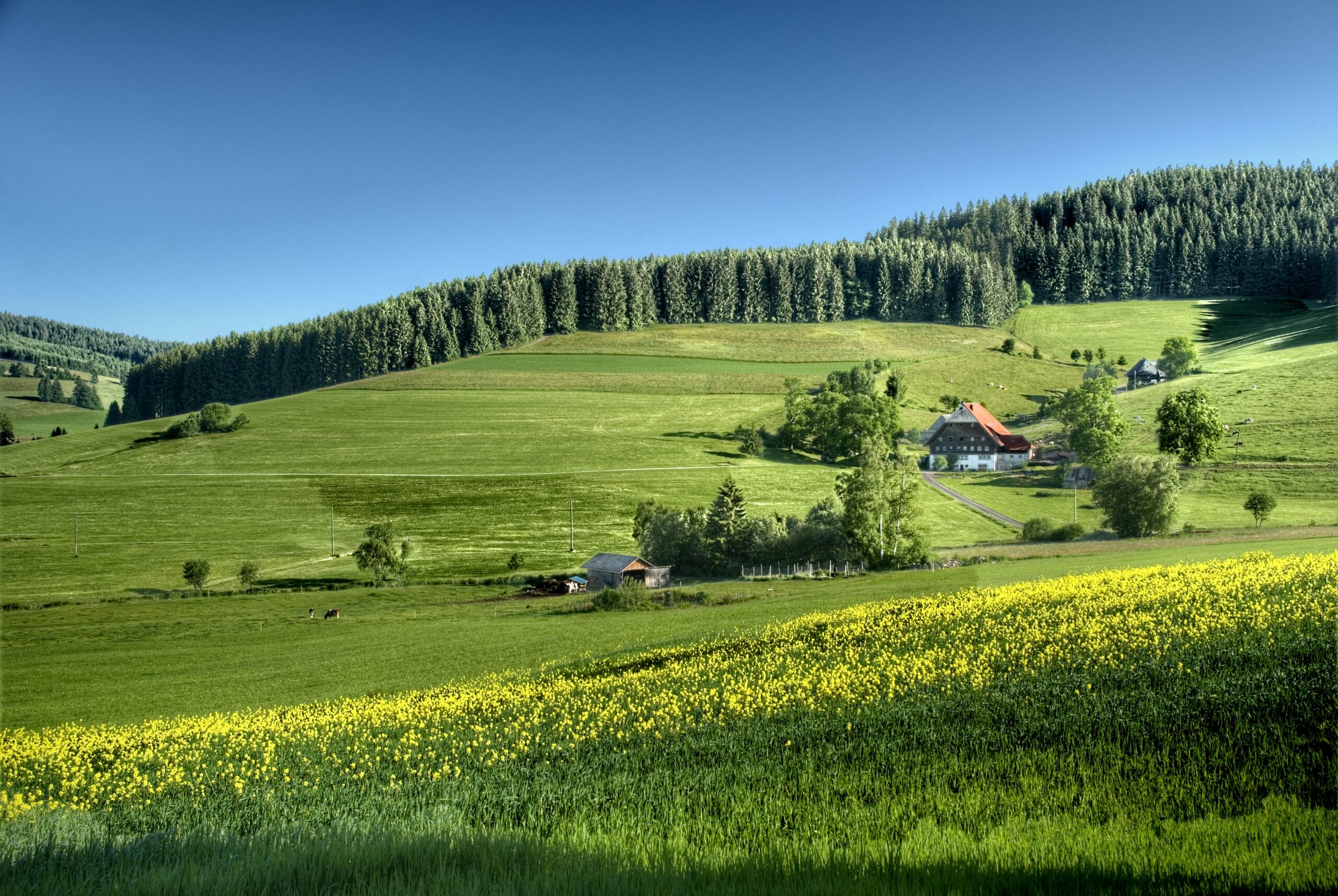
It’s not a mass phenomenon, but the trend is on the rise: More and more Russians are turning their backs on the hustle and bustle of city life and moving to rural areas. The younger generation, in particular, is taking a liking to this lifestyle—and is rediscovering the traditional wooden homes of their grandparents.
According to market participants, the issuance of mortgages for the construction of single-family homes and the purchase of country homes in Russia has increased. For mortgages on ready-to-move-in single-family homes, Russia’s largest financial institution, Sberbank, recorded a volume of more than 80 billion rubles in the first three months of the year, equivalent to 906.3 million — a 78% increase compared to the same period last year. Lending for home construction loans totaled 47.7 billion rubles (540.4 million euros)—a 2.5-fold increase compared to the same period last year. In the second half of 2025, country homes accounted for 10% of total mortgage lending, while home construction loans accounted for 5%. According to Domclick, a real estate portal operated by Sberbank, the average loan amount for home construction is 6.3 million rubles and for the purchase of a country house is 3.8 million rubles, or 71,375 and 43,052 euros, respectively.
According to market experts, the reduction in mortgage rates—driven by the easing of Russia’s key interest rate—is attracting more prospective buyers. The key interest rate has been gradually lowered from 21% to the current 14.5% since the summer of 2025. Another reason is the favorable season, as many people typically start building their homes in the spring. At the same time, prices for home construction have risen dramatically year-over-year. At the beginning of 2026, one square meter cost 80,000 rubles (906 euros), an increase of about 15% compared to the start of 2025. Ready-to-move-in country homes have also become 10.7% more expensive, rising to around 50,000 rubles (566 euros). According to data from the Russian real estate platform Cian, the average price for a single-family home is 16.5 million rubles, equivalent to 186,900 euros.
More Mortgages, Fewer Transactions
The state-owned mortgage bank Dom.RF recorded the largest increase in demand for conventional mortgage loans without government subsidies—a 132% increase compared to February. According to Igor Rudenko, head of mortgage lending at Dom.RF, there was also a rise in demand in the home construction segment. The increase in approved construction loans in March was 34% compared to the previous month. In addition, demand for single-family homes rose by 73% in March. The number of applications for state-supported loans, such as the family mortgage, grew by 28% in the same month.
In contrast, the Russian real estate platform Cian observed significantly fewer transactions in the country home segment in the first quarter compared to a year ago. In the first three months of 2026, approximately 60,000 homes found buyers, representing a 33% decline. Cian Chief Analyst Alexei Popov explains: “The market for country homes is under pressure. Real estate loans without subsidies remain expensive, the new rules for the family mortgage are reducing the number of potential buyers, and the snowy winter in many regions isn’t helping the market either.” The rules for the family mortgage were recently tightened. Since February, a home may only be financed with a single loan (6 to 12 million rubles, 68,000 to 136,000 euros). Taking out a second loan, as was previously common, is prohibited.
Gen Z Dreams of a Country Home
Life in the countryside and in small towns appeals particularly to younger generations. A survey by the Russian internet company Yandex found that 67% of Generation Z respondents (born between 1997 and 2012) dream of owning a country home. A third of them even stated that they want to make this dream a reality within the next two to three years. Millennials (born between 1980 and 1996) are slightly more reserved at 56%, while among Generation X (born between 1965 and 1979), 50% wish for a cozy home far from the hustle and bustle of the big city. According to data from the Russian statistics agency Rosstat, between 2023 and 2024, 18% more Russians aged 25 to 34 moved to a village than had done so before the COVID-19 pandemic.
Social researchers see several reasons for this trend. Given the high stress levels and environmental pollution in cities, young Russians—who were born into the digital age with its sensory overload—are seeking a quieter daily life. The exodus from cities primarily affects the outskirts of major cities. The cost factor also plays a role for many Russians. Market experts note that a Moscow salary allows for a much more comfortable life in the countryside. Above all, IT professionals, designers, and remote marketing specialists are answering the call of the idyllic countryside. Experts do not consider this trend a mass phenomenon, yet this niche segment could grow rapidly in the coming years in light of further interest rate cuts.
Grandpa’s Cabin Makes a Comeback
An interesting phenomenon in the Russian real estate market is so-called “Isbing,” derived from the Russian word “isba,” which translates to “hut.” Russians are purchasing traditional log cabins in rural areas for their own use or renting them out to young tourists. According to the business newspaper Kommersant, the price range for accommodation in an “isba” or a larger log cabin is between 7,000 and 150,000 rubles per night, or 80 to 1,700 euros. The demand for historic log cabins has now led to a doubling of their selling price. Two years ago, a dilapidated log cabin cost 500,000 to 700,000 rubles (5,600 to 8,000 euros)—today, prices start at 1.5 million rubles and can reach 4.5 million (17,000 to 51,000 euros), according to industry representatives.
Rural Migration in Germany
The exodus from cities is more pronounced in Germany than in Russia. According to a study by the Federal Institute for Population Research (BiB), German citizens have been increasingly moving to rural areas again since 2014. Families in particular are turning their backs on the big city. According to the Handelsblatt, a total of 56,600 people moved from Germany’s seven largest cities to directly adjacent rural districts or independent cities in 2021. The highest number of departures was recorded in Berlin (17,249), Hamburg (11,145), Cologne (7,894), and Frankfurt (6,653). The Federal Institute for Population Research attributes this trend to the housing shortage in major cities and high housing prices in urban areas.
This article first appeared in the exclusive newsletter of the German-Russian Chamber of Foreign Trade
The day's most important Russian economic stories. Free, in your inbox three times a week.
Mon, Wed, Fri. Double opt-in, no tracking, unsubscribe anytime. By subscribing you consent to the processing of your email address as described in our Privacy Policy.