EU Approves Loan for Ukraine and Tightens Sanctions Against Russia
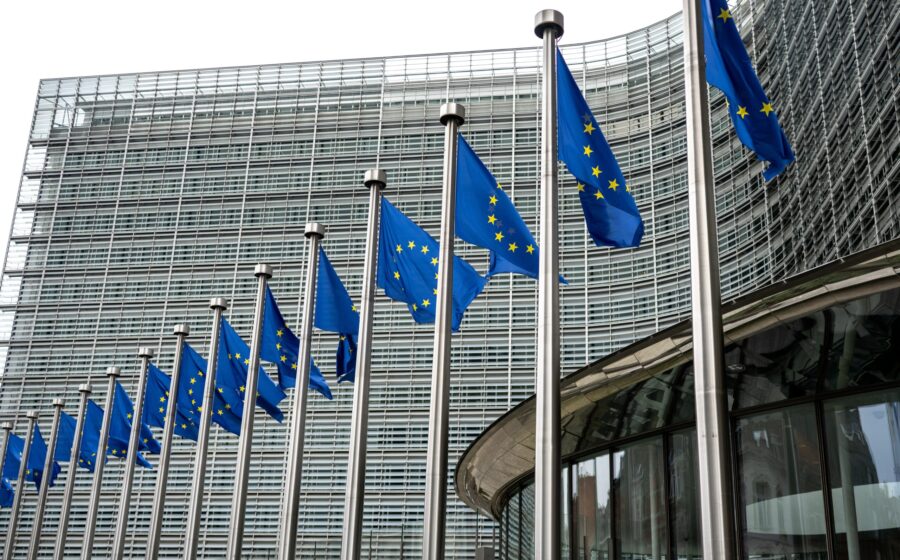
On April 22, the European Union moved forward with two long-stalled decisions at the same time: the release of a 90-billion-euro loan for Ukraine and the adoption of the 20th package of sanctions against Russia. Both initiatives had been delayed in recent months, primarily due to reservations from Hungary and Slovakia. Progress in the negotiations only began once Russian oil was once again flowing to Central Europe via the Druzhba pipeline.
The EU ambassadors in Brussels initiated a written procedure for this purpose, which allows member states up to 24 hours to raise any objections. Cyprus, which currently holds the Council presidency, stated that the procedure is expected to be concluded on the afternoon of April 23.
The vote had previously been closely linked to the debate over the Druzhba pipeline. In Budapest and Bratislava, there was pressure to ensure that oil supplies were secured again before both governments gave their approval to the EU decisions. The political landscape changed further following the change of government in Hungary. Prime Minister Péter Magyar made it clear that he would only agree to a deal if oil supplies were restored. This condition was met shortly before the vote.
Slovakia also insisted on a practical solution regarding oil supplies. Foreign Minister Juraj Blanár stated that Bratislava was prepared to support the sanctions package as soon as Russian oil was physically delivered again. According to diplomats, both Hungary and Slovakia wanted to wait for actual confirmation of the oil flow before giving their final approval.
90 Billion Euros for Ukraine
The loan is considered urgently necessary in Brussels because Ukraine will rely on additional funding in the coming months. The package, which was already agreed in principle in December, will be disbursed in two tranches of 45 billion euros each in 2026 and 2027.
Of this amount, 28 billion euros per year are earmarked for defense spending and 17 billion euros for general budgetary purposes. Together, the package is expected to cover about two-thirds of Ukraine’s financing needs during this period. Hungary, Slovakia, and the Czech Republic were granted exemptions from participating in the joint EU borrowing used to finance the package.
The debate over the loan has once again shown how divergent priorities within the EU have become. National interests clearly play a greater role in matters of financial and sanctions policy than they did a few years ago. This applies not only to Budapest and Bratislava, but increasingly to other member states as well, which are paying closer attention to their own leeway when making energy and economic policy decisions.
The 20th sanctions package: ambitious, but limited
The 20th sanctions package was originally scheduled for February. However, its adoption was delayed for weeks because several member states raised objections to individual points. In addition to Hungary and Slovakia, Greece and Malta also played a significant role, particularly regarding measures against the so-called shadow fleet of Russian oil tankers.
The original plan was to prohibit all EU ships from engaging in activities on behalf of Russia. However, this clause was removed from the draft during the course of negotiations. At the same time, certain regulations regarding the purchase of Russian oil were adjusted in light of the tense situation on the energy market.
Although the package is officially considered one of the most far-reaching expansions of the European sanctions framework in years, in its final form it is likely to have only a limited impact on Russian oil flows. The most important measure—a complete ban on services related to the maritime transport of Russian oil and oil products—was agreed in principle, but is not set to take effect until Brussels reaches an agreement with the G7 on the matter.
This caution reflects concerns that additional restrictions on Russian oil supplies could put further pressure on international energy markets. Without coordination with Washington, such a step did not appear economically or politically realistic in Brussels.
Focus on LNG and maritime infrastructure
New measures targeting the Russian LNG sector, particularly in the Arctic, will take effect immediately. In doing so, the EU is closing a gap that had long remained open in the existing sanctions framework. While Russian oil has been largely off-limits in the EU for years, liquefied natural gas (LNG) has so far been largely exempt for practical supply reasons.
Now, stricter restrictions are to follow gradually. Officially, the EU aims to completely end imports of Russian LNG by early 2027. In practice, however, import volumes are currently continuing to rise as Europe must secure its gas supply.
Starting April 25, technical, financial, and intermediary services related to Russian icebreakers and LNG tankers are prohibited. As early as January 2026, the EU had already decided on an import ban for Russian LNG from short-term contracts. Starting January 1, 2027, the ban will also apply to foreign icebreakers and LNG tankers deployed in Russia’s interest for the Arctic LNG 2 project operated by Novatek.
A significant portion of the specialized vessels for Russian Arctic projects are owned or operated by European companies. Many of these vessels are also maintained in European shipyards. The new service ban aims to sever precisely this technical and logistical link. However, because the rules are being introduced gradually, there is still time to adapt.
In addition, the EU is banning the direct and indirect provision of terminal services for LNG projects in which Russian companies hold more than a 50 percent stake. This also affects Novatek, which holds a 50.1 percent stake in Yamal LNG.
Energy supply remains Europe’s weak spot
It remains unclear how Europe intends to fully compensate for the loss of Russian LNG volumes. Prior to 2022, Russia had supplied approximately 140 billion cubic meters of natural gas to Europe annually. Today, pipeline deliveries have dropped significantly, but LNG imports from Russia reached a peak of around 20 billion cubic meters in 2025—the highest level since 2022.
These volumes account for about 14 percent of the EU’s total gas imports. Together with the remaining pipeline deliveries, Russia’s share of European gas imports still stands at around 12 percent—significantly less than before, but still significant.
The U.S. is now Europe’s most important LNG supplier. But questions about reliability arise here as well, since as supplies become scarcer, Europe is competing with Asian buyers who often pay higher prices. Several tankers destined for Europe have recently been rerouted to other markets.
Shadow Fleet and Financial Sanctions
Another key focus of the package is action against individual ships. An additional 46 ships have been added to the EU’s blacklist. This brings the total number of ships on the list to more than 600. This measure targets those tankers that Russia uses to deliver oil to Asian buyers outside the price cap mechanism.
In addition, the direct sale and resale of tankers to Russian companies will be prohibited in the future. Such contracts must now include specific clauses. The EU aims to prevent Russia from further expanding its fleet by purchasing older vessels.
In the financial sector, the EU is adding 120 individuals and entities to the sanctions list, including 20 banks and financial intermediaries. Institutions accused of playing a role in circumventing sanctions are also included. Transaction bans also apply to the ports of Murmansk and Tuapse, several Russian refineries, and the oil companies Bashneft and Slavneft.
At the same time, it is striking who is not on the list: Gazprombank remains excluded, even though its role in EU gas trade has recently diminished.
Kyrgyzstan is specifically mentioned in the package. Additional export bans are to apply for its role in the transit of sanctioned goods, including machine tools and telecommunications equipment.
In addition, the package expands the legal options available to European companies to claim damages within the EU if they have suffered economic losses due to decisions made in third countries. Brussels aims to provide Western companies with greater protection in the event that their assets in Russia are affected.
The next package is already in the works
Now that the stalemate has ended, Brussels expects a more regular pace of new measures. According to EU Foreign Affairs Commissioner Kaja Kallas, the 21st sanctions package is already being prepared.
The most important unresolved issue, however, remains the ban on services for maritime oil transport. Whether and when it will actually be activated depends on the assessment of the G7 and, in particular, the U.S. As long as the situation on global energy markets remains tense and passage through the Strait of Hormuz is unsafe, Brussels is likely to remain cautious on this issue.
The day's most important Russian economic stories. Free, in your inbox three times a week.
Mon, Wed, Fri. Double opt-in, no tracking, unsubscribe anytime. By subscribing you consent to the processing of your email address as described in our Privacy Policy.