Central Europe
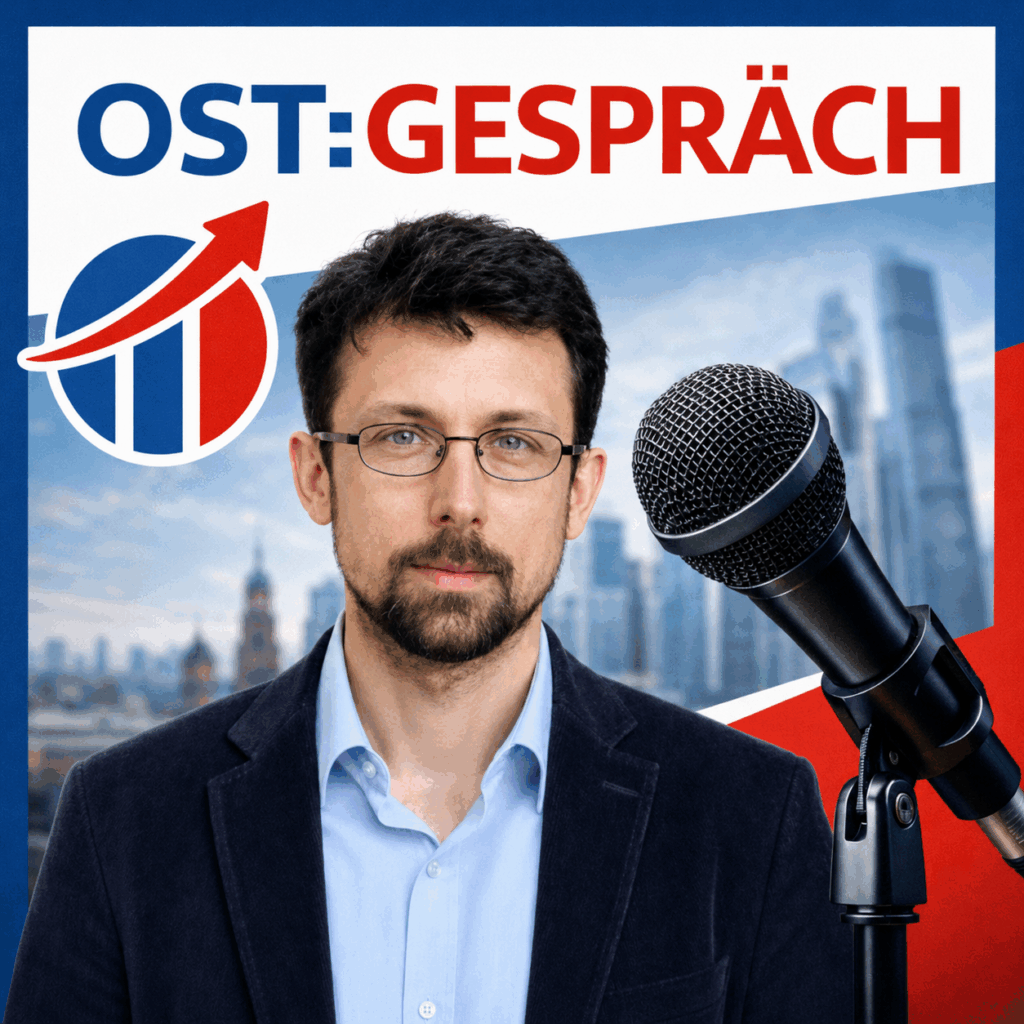
7 questions with Erik Siegl
Exclusive interview with Erik Siegl, Counsellor of the Embassy of the Czech Republic in Germany, Head of the Trade and Economic Department. The interview was conducted by OW author Jonas Prien.
PRIEN: Germany has been the Czech Republic's most important economic partner for years. Is the economic stagnation in Germany now forcing Prague to look specifically for alternative trading partners, or is Germany still the strategic choice?
Siegl: German-Czech trade increased by around 4% in 2025, despite the stagnation in Germany. The importance of the EU internal market and neighborly economic relations continues to grow for both our countries. To make better use of this potential, we "only" need to complete the EU single market, where many non-tariff or regulatory barriers are still holding back trade. Better bureaucracy reduction, digitalization and innovation promotion are of course also necessary.
PRIEN: German-Czech economic relations have long been characterized by close industrial integration, especially in German supply chains. Will this model still be viable in 2026 or is it reaching its structural limits?
Siegl: The trade policy upheavals of recent years and months once again clearly underline how important our EU community is economically, both internally and externally. Of course, some Czech companies are also suffering from the crisis in the German automotive sector. On the other hand, new opportunities are emerging in the fields of armaments, civil engineering, aerospace and the energy industry.
PRIEN: Political speeches often talk about close partnership. Which concrete lighthouse projects in the German-Czech economy actually justify this claim?
Siegl: It is difficult for me to highlight specific lighthouse projects. My view from the embassy in Berlin is cross-sectoral, but with an annual trade volume of EUR 112 billion, I can only overlook a part of it. Just to name two important projects: Digiteq is a subsidiary of Škoda Auto and Volkswagen that is very innovative and active in the field of autonomous driving and assistance systems. In the field of autonomous driving, German car manufacturers are also developing a test site for autonomous vehicles in Sokolov or Cheb. The aerospace group OHB is also investing in the Czech Republic and working closely with Czech partners on projects such as the SOVA research satellite on behalf of the European Space Agency (ESA). This may soon become one of the most important joint high-tech projects.
PRIEN: The Czech Republic has recently made great progress in the areas of digital economy and e-commerce. Which Czech companies or technologies are internationally competitive today, even beyond the domestic market?
Siegl: It is true that e-commerce is very advanced in the Czech Republic, both in terms of consumer behavior (share of e-shop purchases) and in terms of mature IT technologies for e-commerce. Numerous Czech IT companies regularly present themselves at specialized trade fairs and supply their services and products to Germany. Incidentally, the IT sector, especially cyber security, is a Czech strength. It's no wonder that global corporations such as SAP have around 4,000 employees in the country. I would also like to mention knusper.de, an offshoot of the successful Czech company Rohlík.cz. Since the year before last, knusper.de has been delivering food and household goods in Berlin. The logistics system, which is based on precise deliveries in 15-hour windows, is intended for universal use in many other online stores.
PRIEN: Like Germany, the Czech Republic is a classic car country. Is the Czech Republic currently in a better, worse or simply more realistic position than Germany when it comes to the transition to electromobility?
Siegl: I'm cautious about making a final assessment here, as I'm not an automotive expert. Given the extent of the interdependence, it is also difficult to say what is "Czech" and what is "German". We have had a common engineering culture and landscape since at least the 19th century! It can certainly be said that Škoda is also very successful in business with its BEV models. As a country, the Czech Republic has been campaigning for years for more technological openness and flexibility in meeting the EU emission targets.
PRIEN: In terms of energy policy, the Czech Republic is consciously focusing on nuclear energy, including Small Modular Reactors (SMR). What are the specific plans for the border region with Germany?
Siegl: In addition to the completion of two nuclear power plant units and the possible expansion of a second nuclear power plant, the current government, like the previous one, is also planning to develop so-called small modular reactors (SMRs). For two years, the Czech Republic has had a strategy according to which the optimal locations for the construction of SMRs are either one in each region or the locations of the current nuclear power plants. To strengthen this plan, ČEZ acquired a stake in the British company Rolls Royce SMR. However, the exact location of the deep repository is still unclear.
PRIEN: With a view to 2026: Which economic sectors have the greatest growth potential from a Czech perspective and where do you see specific points of contact for German companies?
Siegl: Again, as an expert, I don't dare to judge the individual sectors and make such judgments. What I do see as a trend, however, is that companies that develop new innovations or technologies are often able to use them across different sectors. As we know, this applies not only to AI or IT in general, but also much more broadly. For example, cutting-edge imaging methods from physics research are now being used in industrial applications (material testing) or in space travel, as well as in medicine. The boundaries of innovation application are blurred to some extent and experts from different technical and economic fields come together more frequently.
The post 7 questions with Erik Siegl appeared first on ostwirtschaft.de.
Original article (German):
Read on ostwirtschaft.de →