Turkey
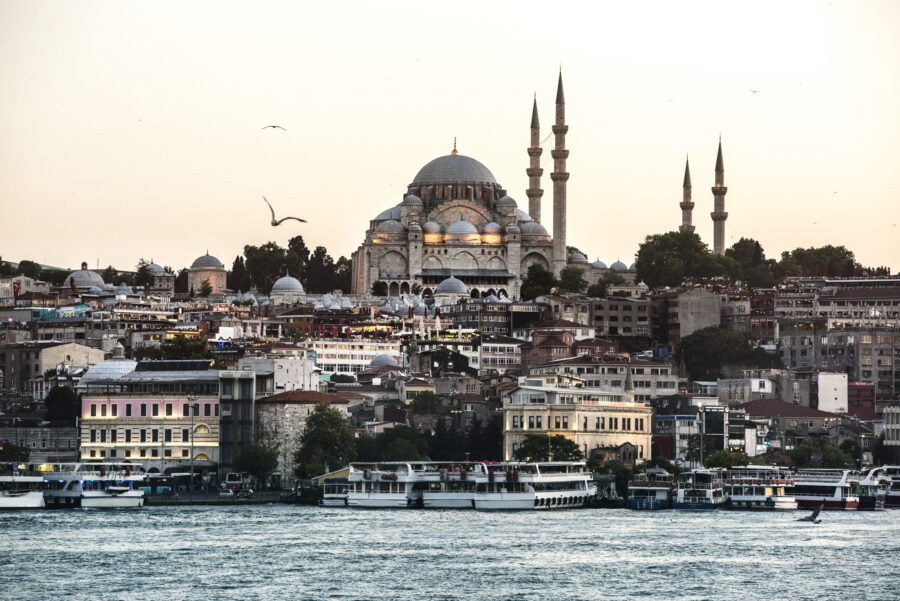
Goodbye Dubai, hello Istanbul?
The idea sounds tempting: as tensions in the Middle East reorganize international capital flows, Istanbul could gain weight as an alternative financial center. If investors from the Gulf region are looking for a more stable regional location, why not Turkey - with its new Istanbul financial center, its size, its geographical location and its claim to be a bridge between Europe, Asia and the Middle East?
It is precisely this narrative that the Turkish government is currently relying on. President Recep Tayyip Erdoğan recently spoke of Turkey's rise to become a "safe haven", Finance Minister Mehmet Şimşek is openly courting capital from the Gulf region, and the Istanbul Financial Center (IFC) is trying to position itself as a new address for banks, asset managers and fintechs. Companies from the areas of Islamic-compliant financial services and digital financial technology are said to be particularly interested.
However, there is a considerable gap between geopolitical opportunity and economic reality.
Turkey is campaigning - but the fundamental issue remains trust
At first glance, Turkey has a lot going for it as a financial center: a large economy, a broad banking system, international connections and a young, high-consumption environment. In addition, there are tax incentives which, according to Turkish representatives, should make the IFC even more attractive than comparable offers in Dubai or Abu Dhabi.
Nevertheless, one crucial question remains unanswered for international investors: How resilient is the institutional environment? After all, anyone committing long-term capital in Turkey is not just looking for tax advantages or office towers, but also for the rule of law, property security and political predictability.
This is precisely where the biggest obstacle lies. Many investors doubt that Turkey can establish itself as a reliable financial center as long as key rule of law and institutional issues remain unresolved. Critics point out that economic decisions in Turkey always appear highly politicized and that the relationship between the state, companies and the judiciary remains difficult to calculate for foreign investors.
A financial center with ambition but weak foundations
Nevertheless, the government is trying to capitalize on the regional uncertainty. The loss or temporary weakening of traditional hubs in the Gulf has fueled hopes in Ankara and Istanbul that some of the financial business could be redirected. Reuters reported that companies from the Gulf region and East Asia in particular were increasingly scrutinizing the IFC.
IFC CEO Ahmet Erdem formulated the ambition accordingly: Turkey and the Istanbul financial center in particular should become a center for the management of global resources. Şimşek also regularly emphasizes that the country wants to regain trust with a credible economic policy course.
But even among Turkish economists, skepticism prevails. Hikmet Baydar from 3.goz Consultancy sees the biggest problem in Turkey's weak country rating, which remains well below investment grade. This is a structural exclusion criterion for many international funds. Burak Arzova from Marmara University goes even further: without confidence in legislation, exchange rate stability and a predictable tax system, Istanbul cannot seriously challenge Dubai.
International rankings also speak a sober language so far. While Dubai and Abu Dhabi continue to lead the Global Financial Centers Index for the region, Istanbul ranks far behind.
Macroeconomic risks remain the key factor holding back growth
In addition, Turkey has well-known economic weaknesses. The country is heavily dependent on energy imports and is therefore particularly susceptible to external price shocks. A renewed tightening of the regional situation would not only burden trade routes and energy costs, but also exert pressure on inflation, exchange rates and financing costs.
The Washington-based energy strategist Umud Shokri therefore described the situation as exposing Turkey's Achilles heel in terms of energy policy. The current development has not only triggered immediate price adjustments, but has also revealed deeper structural weaknesses. Without reforms, the country would remain vulnerable to external shocks, which would be cushioned in the short term but not resolved.
This diagnosis hits the nail on the head. Because even if the current economic team has built up confidence, the overall picture remains fragile. High inflation, the recurring devaluation of the lira and the comparatively low credit rating are deterring the very investors that a financial center like Istanbul urgently needs.
Erdoğan seeks the stage of the global economy
It is no coincidence that Ankara is nevertheless intensifying international dialog. At the beginning of April, Erdoğan received 40 international CEOs in Istanbul for a meeting organized by the World Economic Forum. This format alone was remarkable, as Erdoğan has no longer been considered a natural partner of the WEF since his public falling out in Davos in 2009.
Observers see this as an attempt to reorganize the relationship between Ankara and the global business elite. According to analyst Ceren Kenar, the meeting should also be read as a signal that international players continue to perceive Turkey as a relevant business location despite its weaknesses.
At the same time, this meeting in particular shows the ambivalence of the moment. On the one hand, Turkey is being taken seriously as an important geopolitical player. On the other hand, this does not mean that it is already perceived as a safe and preferred financial center.
Between regional opportunity and structural doubt
Turkey therefore certainly has a window of opportunity. If capital in the Middle East becomes more cautious and companies reconsider their regional positioning, Istanbul could at least make it onto the shortlist as an alternative. Tax advantages, market size and strategic location speak for it.
However, a genuine rise to the "new Dubai" requires more than opportunistic capital movements. Above all, it requires institutional trust, macroeconomic stability and political predictability. As long as these factors do not come together convincingly, Istanbul will remain an interesting candidate rather than an established safe haven.
In other words: Turkey can benefit from the moment - but it has not yet proven that it can turn it into a long-term financial model.
The post Goodbye Dubai, hello Istanbul? appeared first on ostwirtschaft.de.
Original article (German):
Read on ostwirtschaft.de →