Russia Economic Briefing
Growth, key interest rate, rouble exchange rate: forecasts in view of the war in Iran
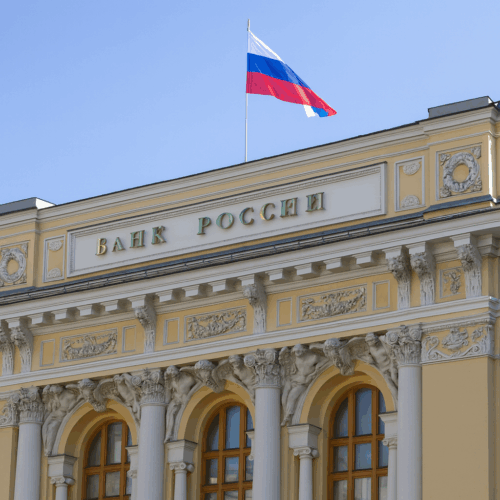
The Russian central bank has once again eased its tight monetary policy with its latest key interest rate decision. Last Friday, the monetary authorities lowered the key interest rate by 0.5 percentage points to 15%. It was the second cut this year and the seventh since June 2025, when the central bank began lowering the key interest rate from a long-term high of 21%. The high interest rates were intended to curb inflation, which was being driven up by a sharp rise in military spending. Now, lower interest rates are intended to stabilize the growth of the Russian economy, which fell from 4.9% to 1% in 2025.
Effects of the war in Iran
Commenting on the global economic consequences of the Israeli-American military operation against Iran, which has been ongoing since the end of February, Elvira Nabiullina, head of the Central Bank for many years, said: "The situation in the Middle East is having a significant impact on the global commodity markets. The final impact on the Russian economy will depend on the duration and extent of these geopolitical events. "On the one hand, higher oil prices could support Russia's export earnings and the rouble in the short term, according to the head of the central bank. However, she also warned: "If we talk about longer-term effects, the situation in the Middle East could have a negative impact on growth prospects for global demand and investment, which could lead to higher inflation in energy-importing countries and disrupt supply chains. Essentially, this is another supply shock that will affect global costs and, to some extent, impact prices on the Russian market. In addition, logistical problems could also affect our export volumes."
Central bank expects "balanced growth"
Last Friday, Nabiullina explained the renewed cut in the key interest rate as a move towards a balanced growth path. Nabiullina apparently believes that "balanced growth" will be achieved if the Russian economy grows by 0.5% to 1.5% in the current year, as expected in the central bank's "medium-term forecast". Although Russia's overall economic output in the first quarter of 2026 is unlikely to reach the annual growth rate of 1.6% previously expected by the central bank, she maintained in the press conference that the Russian economy will be able to grow by around 1% again in 2026.the business newspaper Kommersant commented on the central bank's decision as follows: "The Central Bank describes the current situation as a transition from the overheated growth of 2023-2024 to a more sustainable development path - with falling demand, reduced inflationary pressure and a more balanced economic structure. According to this logic, the central bank interprets the current economic slowdown as a necessary phase in the transition to a new equilibrium." As reasons for the weak production development at the beginning of 2026, the head of the central bank once again referred to the "base effect", among other things: the economy grew strongly in the comparative month of January 2025. In addition, there were two fewer working days in January this year than in the previous year, said Nabiullina. The exceptionally cold weather this year has also slowed down production in the construction industry, and the Institute for Economic Forecasts of the Russian Academy of Sciences (IEF-RAS) expects a further increase in gross domestic product of around 1% in 2026 as a whole in its recently updated quarterly forecast for economic development in Russia. However, it assumes that real gross domestic product is likely to stagnate in the first half of the year.
High inflation expectations
According to the central bank's medium-term forecast, the annual inflation rate will fall to between 4.5% and 5.5% in December 2026 if the current monetary policy is maintained. In February, the annual inflation rate was 5.9%. From 2027, annual inflation is expected to be in the target range of 4.0%. Meanwhile, the inflation expectations of households and companies in Russia are worryingly high. At 15.6%, the inflation rate perceived by the population reached its highest level since August 2025 in March. From November 2025 to February 2026, the figure had stood at 14.5%, with the latest data from the central bank pointing to a slowdown in domestic demand, particularly consumer spending. The monetary authorities explain that many consumers have brought forward expensive purchases to 2025 due to the increases in VAT and the car recycling fee. In addition, small companies reported significantly lower demand expectations in surveys at the beginning of the year. Surveys also showed that the shortage of skilled workers was gradually easing because companies were planning to hire fewer staff. However, unemployment remains at a record low.
"Moderate" increase in capital investment
According to central bank estimates, the economy's production capacities were further expanded last year. Although investment in fixed assets fell slightly at the end of 2025, it remained close to the record levels of recent years. In real terms, they were almost a quarter higher in 2025 than in 2021, according to the monetary authorities. Investment activity remains high, especially in the manufacturing and service sectors. According to the central bank, this is partly due to government support measures and investments to substitute imports. The investment plans for 2026 are more moderate, according to the central bank president. Company surveys show that more companies are planning to expand their production capacities in 2026 than to reduce them.
Future key interest rate development
External factors are preventing the Russian central bank from lowering the key interest rate any further, explains Natalya Orlova, chief analyst at Alfa-Bank, Russia's largest private bank. The oil price, transportation costs and a possible rise in consumer prices are effects of the Iran conflict that are fueling inflation, says Natalia Orlova. The analyst predicts that the monetary authorities will cut the key interest rate by half a percentage point in April and could become even more cautious over the course of the year, for example with key interest rate cuts of 0.25 percentage points. According to Orlowa, the key interest rate will stand at 13% at the end of the year and, according to observers, the readjustment of the budget rule will influence future key interest rate decisions, as will ongoing geopolitical tensions. Andrei Melashchenko, chief economist at Moscow-based investment company Renaissance Capital, believes that the central bank's reaction to the adjusted budget policy is still difficult to predict. He expects a reduction of 0.5 percentage points in April and a base rate of 12-13% at the end of the year, and according to Natalya Vashtcheliuk, chief analyst at Russian asset manager Pervaya, high inflation expectations within companies and the population stand in the way of major interest rate cuts. Vashtcheliuk expects a key interest rate level of 12% by the end of 2026.
Is the rouble going downhill?
Last Thursday, the exchange rate of the Russian currency fell to 87 roubles to the dollar and 100 roubles to the euro for the first time since spring 2025. Prior to this, the dollar exchange rate had been well below the 80 rouble mark for several months. Analysts explain the sharp devaluation with the halt in currency trading as part of the Russian budget rule. This has led to an increased demand for foreign currency, which has put pressure on the rouble exchange rate, explains Bogdan Svaritsch, Head of Banking and Financial Market Analysis at Promsvyazbank PSB, but experts see no signs of a drastic devaluation of the rouble in the coming months. The Russian investment company Finam expects a moderate phase of weakness for the Russian currency in the spring: 80-84 roubles to the dollar, 91-95 roubles to the euro. In a central bank survey from the beginning of March, analysts forecast an average of 84 roubles to the dollar in 2026. According to the forecasts, the Russian currency will only depreciate significantly in the following years: 92.3 roubles to the dollar in 2027 and 97.8 roubles to the dollar in 2028. The Russian Ministry of Economy expects a weaker exchange value of the Russian currency: from an average of 92.2 roubles to the dollar this year to 95.8 roubles in 2027 and 100.1 roubles in 2028.According to estimates by Promsvyazbank PSB, the Russian currency will depreciate to 87.5 roubles to the dollar towards the end of the year. According to Finam analyst Alexander Potanin, the trend could reverse as early as this May: By then at the latest, the unexpectedly profitable oil business will flush more foreign currency into the Russian market. The military operation against Iran is fueling global oil and gas prices. On March 9, the price of the global benchmark Brent crude temporarily soared to over 120 dollars per barrel. As of Monday, the North Sea variety stood at 108.06 dollars. The Russian oil grade Urals is also currently celebrating a comeback. On March 20, Urals was quoted at 104.84 dollars per barrel - in February, the average value was far below this at 44.59 dollars per barrel.
Lack of foreign currency puts the rouble under pressure
According to observers, the weakness of the rouble began on March 5, when the Russian Ministry of Finance paused selling foreign currency. Within one day, foreign currency sales fell from almost 12 billion roubles to 4.6 billion roubles per day, from 123.3 million euros to 47.2 million euros. At the same time, Russia's oil exporters have also cut back on the sale of foreign currency, as the industry has been hit by a mixture of low oil prices and high discounts on the most important Russian oil grade, Urals, since the beginning of the year. According to the Russian Central Bank, the volume of foreign currency sold by exporters in February was 31% lower than in January. The Russian budget rule stipulates that oil and gas revenues above a fixed price do not flow into the current budget. If the oil price exceeds this mark, the additional revenues are transferred to the National Welfare Fund. Technically, this is done by purchasing foreign currency or gold. If the value is below the reference value, the Russian Ministry of Finance sells foreign currency and gold, as it has been doing for the past eight months. At the beginning of March, the Ministry of Finance stopped selling foreign currency for the time being and announced a change in the oil reference value, which currently stands at 60 US dollars, due to falling oil revenues. The current level under discussion is 45-55 dollars. The ministry justified this step with the preservation of the prosperity fund.
This article first appeared in the exclusive newsletter of the German-Russian Chamber of Commerce Abroad
The post Growth, key interest rate, rouble exchange rate: Forecasts in view of the Iran war appeared first on ostwirtschaft.de.
This article first appeared in the exclusive newsletter of the German-Russian Chamber of Commerce.